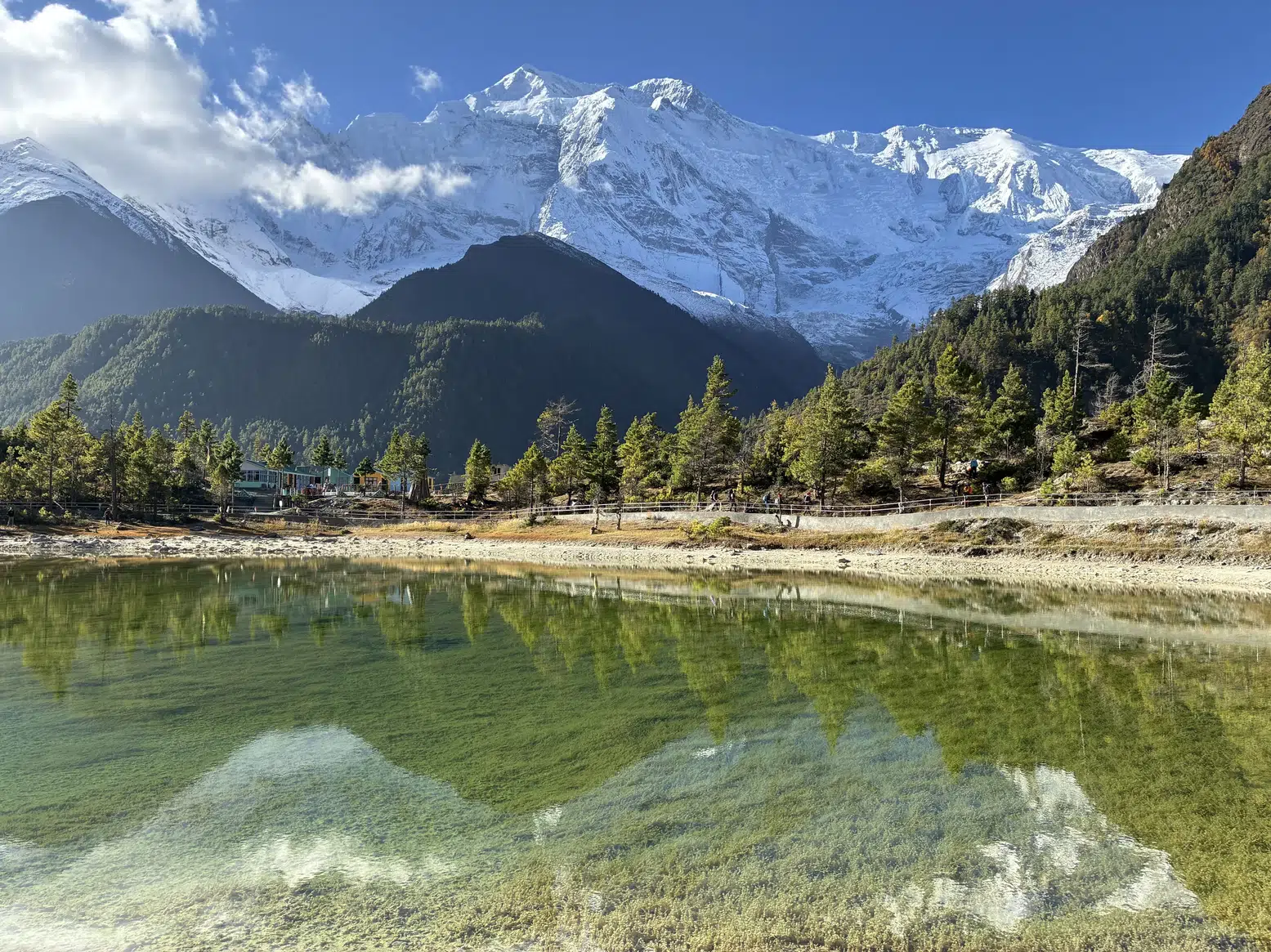
Asia is home to some of the most spectacular and geographically important mountain ranges in the world. From the towering Himalayas to the rugged Caucasus, these mountain systems stretch across vast areas and have shaped the continent's landscapes, climate, cultures and history for thousands of years.
For travellers, Asia's mountain ranges offer much more than impressive scenery. They provide opportunities for trekking, mountaineering, wildlife viewing, cultural exploration and adventure travel. Some are home to the world's highest peaks, while others are known for ancient trade routes, unique ecosystems and sacred landscapes.
Whether you are an experienced mountaineer or simply fascinated by dramatic landscapes, exploring the famous mountain ranges of Asia can be an unforgettable experience.
Here are nine of the most famous mountain ranges in Asia that deserve a place on every mountain lover's list.
The Himalayas are undoubtedly the most famous mountain range in Asia and perhaps the world. The name Himalaya comes from Sanskrit and is commonly interpreted as "abode of snow."
The range stretches across several countries, including Nepal, India, Bhutan, China and Pakistan. It contains some of the highest mountains on Earth, including Mount Everest, Kanchenjunga, Lhotse, Makalu and Dhaulagiri.
The Himalayas are a major destination for trekking and mountaineering. Nepal is particularly famous for Himalayan adventures, with popular routes such as the Everest Base Camp Trek, Annapurna Circuit and Langtang Valley Trek.
Beyond adventure tourism, the Himalayas have enormous cultural and environmental importance. The region is home to diverse ethnic communities, ancient monasteries, protected areas and rare wildlife.
Mount Everest, the world's highest mountain
Popular trekking routes in Nepal
Diverse Himalayan cultures
Rare wildlife and protected areas
Spectacular glaciers, valleys and alpine landscapes
For travellers looking for a combination of adventure, culture and extraordinary scenery, the Himalayas remain one of Asia's most remarkable destinations.
The Karakoram Range is another legendary mountain system in Asia. It is located primarily in the areas where Pakistan, India and China meet.
The range is famous for K2, which rises to approximately 8,611 metres and is the second-highest mountain in the world after Mount Everest.
The Karakoram is known for its steep peaks, enormous glaciers and rugged terrain. Some of the world's largest glaciers outside the polar regions are found here, including the Baltoro Glacier.
The region attracts experienced mountaineers, trekkers, photographers and adventure travellers. The famous Baltoro Glacier Trek provides access to some of the most dramatic mountain scenery in the region.
The Karakoram is also home to beautiful valleys and communities, including the Hunza region, which has become a popular destination for travellers seeking spectacular landscapes and cultural experiences.
K2, the world's second-highest mountain
Baltoro Glacier
Dramatic granite and snow-covered peaks
Hunza Valley
Challenging mountaineering routes
The Hindu Kush is a vast mountain range extending through Afghanistan and Pakistan, with geographical connections toward Central and South Asia.
The range is known for its rugged terrain, high valleys and historically important mountain passes. It has played an important role in the movement of people, armies and traders between Central and South Asia.
The Hindu Kush contains numerous high peaks, with Tirich Mir, rising to about 7,708 metres, generally regarded as its highest mountain.
The landscape varies from dry mountain valleys to snow-covered peaks. Although some parts of the region are less accessible to tourists than the Himalayas, the Hindu Kush remains an important geographical and historical feature of Asia.
Tirich Mir
Dramatic high-altitude landscapes
Historic mountain passes
Rich cultural diversity
Important connection between Central and South Asia
The Pamir Mountains are located primarily in Tajikistan, with parts extending into Afghanistan, China, Kyrgyzstan and Pakistan.
Often referred to as the "Roof of the World," the Pamirs are characterised by high plateaus, enormous valleys, glaciers and rugged peaks.
The range has historically been an important crossroads between Central Asia, South Asia and China. Ancient trade routes passed through the broader region, connecting different civilisations.
Today, the Pamirs attract adventurous travellers interested in remote landscapes, road trips, trekking and cultural experiences. The famous Pamir Highway is particularly popular among adventure travellers.
One of the most notable peaks is Ismoil Somoni Peak, which reaches approximately 7,495 metres.
High-altitude plateaus
Pamir Highway
Remote mountain villages
Glaciers and dramatic valleys
Spectacular Central Asian scenery
The Tian Shan, meaning "Mountains of Heaven," is one of the most impressive mountain systems in Central Asia.
The range stretches across Kyrgyzstan, Kazakhstan, China and Uzbekistan. It is famous for snow-covered peaks, alpine lakes, glaciers and expansive valleys.
One of its most famous mountains is Jengish Chokusu, also known as Victory Peak, which reaches approximately 7,439 metres.
The Tian Shan region offers excellent opportunities for trekking, horse riding, mountaineering and nature-based tourism. Kyrgyzstan is particularly popular among travellers because of its dramatic mountain landscapes and traditional nomadic culture.
The combination of mountains, high-altitude lakes and open grasslands makes the Tian Shan visually distinctive.
Jengish Chokusu
Issyk-Kul region
Alpine lakes and glaciers
Trekking and horse-riding opportunities
Nomadic cultural experiences
The Kunlun Mountains form one of the major mountain systems of China and Central Asia. The range extends along the northern edge of the Tibetan Plateau and stretches for thousands of kilometres.
The Kunlun Mountains are geographically significant because they form part of the boundary surrounding the Tibetan Plateau. Their remote landscapes include high mountains, glaciers, deserts and vast areas of wilderness.
The range has also played an important role in Chinese mythology and traditional culture. In ancient Chinese traditions, Kunlun was sometimes described as a mythical mountain associated with immortality and the dwelling place of divine beings.
The combination of geography, mythology and natural beauty makes the Kunlun Mountains particularly fascinating.
Extensive mountain system in China
High-altitude landscapes
Glaciers and remote wilderness
Connection with Tibetan Plateau
Important place in Chinese mythology
The Altai Mountains are located in a region where Russia, Mongolia, China and Kazakhstan meet.
The range is known for its beautiful combination of snow-covered peaks, alpine meadows, forests, rivers and lakes. Unlike some of Asia's extremely high mountain ranges, the Altai are particularly appreciated for their diverse landscapes and relatively wild environment.
The Altai region is also culturally important. Traditional nomadic communities have lived in and around these mountains for generations, maintaining distinctive traditions and lifestyles.
The mountains are home to diverse wildlife, including species adapted to the harsh conditions of Central Asia.
For nature lovers, photographers and adventure travellers, the Altai offer an opportunity to explore a less crowded side of Asia's mountain landscapes.
Cross-border mountain landscape
Alpine lakes and meadows
Rich biodiversity
Nomadic culture
Trekking and outdoor adventure
The Zagros Mountains are one of the most important mountain systems in Western Asia. The range stretches through Iran, Iraq and parts of southeastern Turkey.
Unlike the permanently snow-covered landscapes associated with the Himalayas or Karakoram, the Zagros have a different character. Their landscapes include rugged ridges, valleys, forests, grasslands and dry mountainous areas.
The mountains have been closely connected with human civilisation for thousands of years. Communities have lived in the Zagros region for centuries, and the range has influenced settlement, agriculture, migration and trade.
The Zagros are also important for biodiversity, with various plant and animal species adapted to the region's climate and terrain.
Extensive mountain landscape in Western Asia
Rich cultural history
Diverse valleys and ecosystems
Traditional mountain communities
Important geographical feature of Iran and Iraq
The Caucasus Mountains are located between the Black Sea and Caspian Sea, forming a significant geographical region between Europe and Asia.
The range is generally divided into the Greater Caucasus and Lesser Caucasus. It extends across areas including Georgia, Russia, Azerbaijan and Armenia.
The Greater Caucasus contains Mount Elbrus, which rises to approximately 5,642 metres and is commonly recognised as Europe's highest mountain under the conventional geographic boundary.
The Caucasus is famous for its dramatic peaks, deep valleys, glaciers and remarkable cultural diversity. Georgia, in particular, has become increasingly popular among travellers interested in mountain scenery, hiking and traditional villages.
Mount Elbrus
Dramatic mountain valleys
Glaciers and alpine landscapes
Rich cultural diversity
Hiking and mountaineering opportunities
Each mountain range has its own character. Some are famous for extreme altitude, while others are known for biodiversity, culture or historical importance.
| Mountain Range | Major Countries | Known For |
|---|---|---|
| Himalayas | Nepal, India, Bhutan, China, Pakistan | Mount Everest and world's highest peaks |
| Karakoram | Pakistan, India, China | K2 and massive glaciers |
| Hindu Kush | Afghanistan, Pakistan | Rugged peaks and historic passes |
| Pamir | Tajikistan, Afghanistan, China, Kyrgyzstan, Pakistan | High plateaus and Pamir Highway |
| Tian Shan | Kyrgyzstan, Kazakhstan, China, Uzbekistan | Alpine lakes and "Mountains of Heaven" |
| Kunlun | China and Central Asia | Tibetan Plateau and remote wilderness |
| Altai | Mongolia, Russia, China, Kazakhstan | Biodiversity and nomadic culture |
| Zagros | Iran, Iraq, Turkey | Ancient settlements and rugged valleys |
| Caucasus | Georgia, Russia, Armenia, Azerbaijan | Mount Elbrus and cultural diversity |
Asia's mountain ranges are far more than spectacular tourist attractions. They play a major role in the continent's environment, climate, water systems and human history.
Many major Asian rivers originate in or around mountain regions. Snow and glaciers store freshwater and release it gradually, supporting ecosystems, agriculture and communities across large areas.
Mountain ranges influence rainfall, winds and temperature patterns. They can act as natural barriers that affect weather systems across vast regions.
Mountain ecosystems contain a remarkable variety of plants and animals. Changes in elevation create different habitats, from forests and grasslands to alpine environments.
Many Asian mountains are considered sacred or spiritually significant. Religious traditions, local legends and ancient communities have developed around these landscapes.
Mountain ranges attract millions of travellers interested in trekking, mountaineering, hiking, camping, photography and other outdoor activities.
The answer depends on the type of experience you want.
If you are looking for classic high-altitude trekking, the Himalayas are an obvious choice. Nepal offers a wide variety of established trekking routes suitable for different experience levels.
For remote adventure, the Karakoram and Pamir Mountains offer spectacular landscapes and challenging journeys.
For cultural and nature-focused travel, the Altai and Tian Shan provide opportunities to experience mountains alongside traditional communities and expansive natural landscapes.
For travellers interested in history and geography, the Hindu Kush, Zagros and Caucasus offer fascinating combinations of mountains and ancient cultures.
Asia's mountain ranges represent some of the most extraordinary landscapes on Earth. From the world's highest summit in the Himalayas to the dramatic glaciers of the Karakoram and the remote valleys of the Pamirs, each range has its own identity.
These mountains are also deeply connected to the people who live around them. They influence climate, provide water, support biodiversity and preserve centuries-old cultures and traditions.
For adventure seekers, photographers and nature lovers, exploring Asia's mountains can be a life-changing experience. Whether your dream is to stand beneath Mount Everest, trek through the Karakoram, explore the Tian Shan or discover the remote Altai, Asia offers an incredible variety of mountain adventures.
Among them, the Himalayas remain one of the most iconic mountain destinations in the world, particularly for travellers visiting Nepal. Their combination of towering peaks, legendary trekking routes, diverse cultures and extraordinary scenery continues to attract adventurers from every corner of the globe.