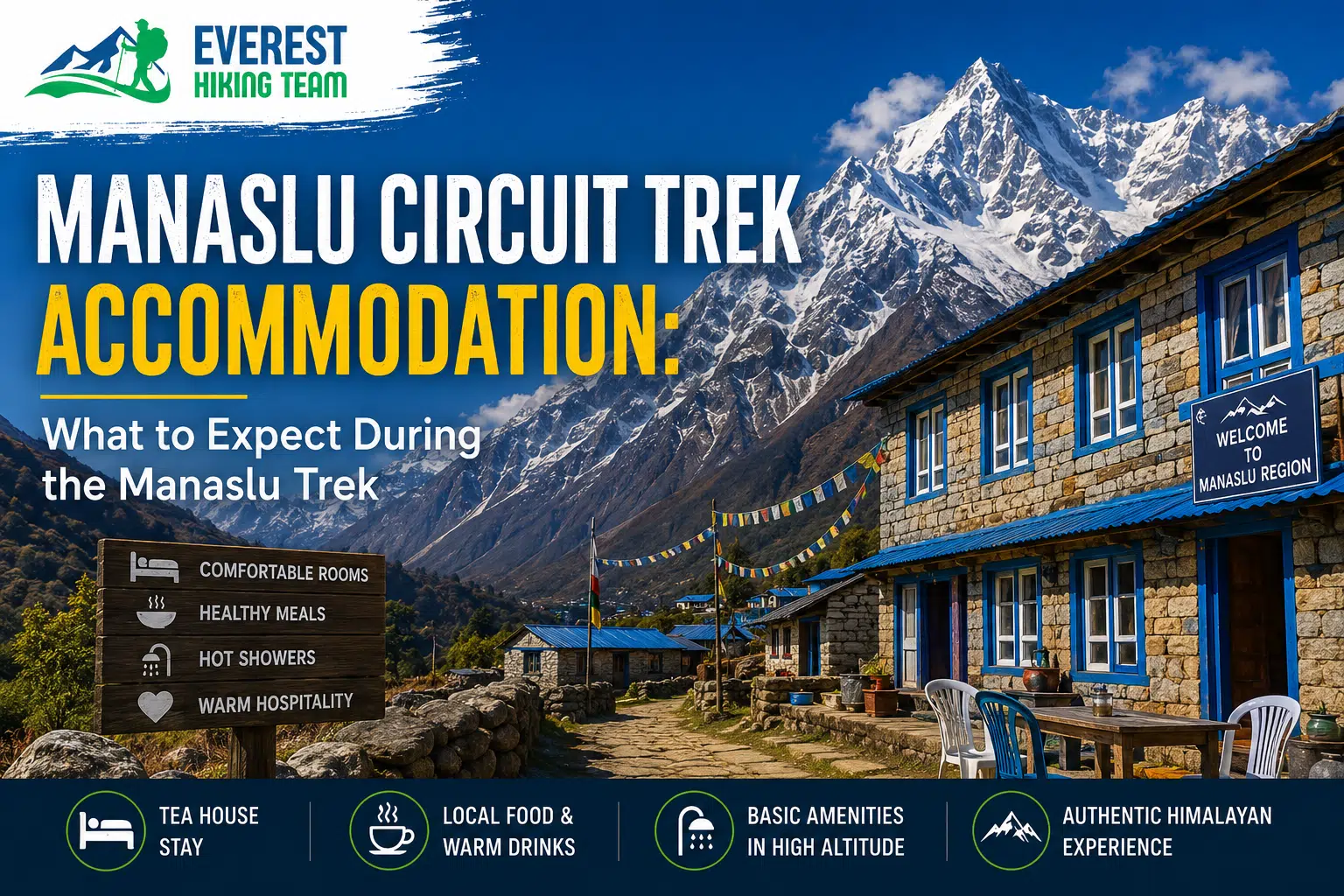
The Manaslu Circuit Trek is one of Nepal’s most rewarding trekking routes, combining spectacular Himalayan scenery, remote mountain villages, rich cultural heritage, and challenging high-altitude terrain. The trail circles Mount Manaslu, the eighth-highest mountain in the world, and passes through diverse landscapes ranging from subtropical forests and river valleys to alpine meadows and glacial surroundings. One of the most important aspects of preparing for the trek is understanding the accommodation available along the route.
Unlike trekking destinations with developed hotels and resorts, the Manaslu Circuit relies mainly on locally operated teahouses and small mountain lodges. The standard of accommodation varies according to the location, with facilities generally becoming more basic as the trail gains elevation. Knowing what to expect from these lodges can help trekkers prepare properly and enjoy a more comfortable journey.
Accommodation on the Manaslu Circuit is primarily provided by teahouses and family-run mountain lodges. These establishments are designed to meet the essential needs of trekkers, offering a place to sleep, meals, basic bathroom facilities, and communal areas where guests can relax after a day on the trail. The facilities are generally simple but adequate for the conditions of the region.
In the lower sections, trekkers can find comparatively comfortable rooms and better access to facilities such as hot showers, electricity, and mobile connectivity. As the route progresses toward higher settlements, the number of lodges decreases and the facilities become more basic. This difference is largely due to the remote location, difficult transportation, and colder conditions at higher elevations.
Most teahouse rooms are simple and practical. A typical room generally contains two single beds with mattresses, pillows, and blankets. Some lodges may provide a small table or limited storage space, but rooms are usually designed with functionality rather than luxury in mind. Twin-sharing accommodation is the most common arrangement, although availability can depend on the lodge and trekking season.
Individual rooms are generally not heated. During cold evenings, trekkers usually gather in the communal dining room, where a central stove may provide warmth. Because the walls between rooms can be thin, some noise from neighboring rooms should also be expected. Carrying earplugs can be useful for travelers who prefer a quieter sleeping environment.
The lower sections of the Manaslu Circuit have more developed villages and a greater selection of teahouses. Places such as Machha Khola, Jagat, Deng, and Namrung have several accommodation options serving trekkers throughout the main trekking periods. Rooms are generally basic but comfortable enough for an overnight stay after a long day of walking.
Facilities in these lower villages are usually more accessible than those found at higher elevations. Electricity, hot showers, mobile connectivity, and charging facilities may be available depending on the lodge. Some accommodations may also offer attached bathrooms, although shared bathrooms remain common. The exact facilities vary from one teahouse to another, so trekkers should not expect the same standard at every stop.
Namrung is an important overnight stop on the Manaslu Circuit and marks a noticeable transition toward the higher mountain environment. The village has several teahouses and lodges, many of which are accustomed to hosting international trekkers. Accommodation generally includes twin-sharing rooms, mattresses, blankets, communal dining areas, and basic bathroom facilities.
The surrounding landscape also becomes increasingly impressive around Namrung. Forested terrain begins to give way to more alpine scenery, while Tibetan cultural influences become more visible in the villages and monasteries. Staying in Namrung provides trekkers with an opportunity to rest and prepare for the higher sections of the route.
Samagaon is one of the most significant settlements on the Manaslu Circuit and is commonly used as an acclimatization stop. Because of its importance, the village has several teahouses and generally provides more accommodation choices than the smaller settlements farther along the trail. Rooms are usually basic twin-sharing rooms with beds, mattresses, pillows, and blankets.
The communal dining room is an important part of the teahouse experience in Samagaon. Trekkers gather there for meals, conversation, and warmth, particularly during the evening. Since most itineraries include an additional night in Samagaon for acclimatization, the village also provides a useful opportunity to rest before continuing toward Samdo and the Larkya La region.
After leaving Samagaon, accommodation becomes increasingly basic as the trail enters a more remote and higher-altitude environment. Samdo and Dharamsala have fewer lodges than the lower villages, and the available facilities are primarily focused on providing shelter, food, and a place to rest.
Rooms may be smaller, bathrooms are generally shared, and hot water can be limited. Electricity and internet connectivity may also become less reliable. Trekkers should therefore prepare for reduced comfort during these stages and focus on staying warm, resting adequately, and preparing for the demanding sections ahead.
Dharamsala, also known as Larkya Phedi, is the final major overnight stop before the Larkya La Pass crossing. Accommodation here is among the most basic on the Manaslu Circuit because of the high elevation and remote location. The number of rooms is limited, so accommodation can become busy during the main trekking seasons.
The rooms are simple, and bathrooms are generally shared. The communal dining area provides the main place for trekkers to eat and stay warm before the early start toward Larkya La. Temperatures can become extremely cold at night, making a warm sleeping bag, thermal clothing, insulated jacket, gloves, and warm socks particularly important.
Bathroom facilities depend largely on the location and individual teahouse. Some lower-altitude lodges may provide rooms with attached bathrooms, but shared bathrooms are much more common throughout the route. As the elevation increases, facilities become increasingly basic.
Hot showers may be available in many lower and middle sections of the trek, usually at an additional cost. At higher elevations, hot water becomes more difficult to provide and may be unavailable. Trekkers should carry their own toiletries, toilet paper, hand sanitizer, and a small towel rather than relying completely on lodge facilities.
Electricity is available in many villages along the Manaslu Circuit, although the reliability of the supply varies. Teahouses may provide charging facilities for mobile phones, cameras, and other electronic devices, often for an additional fee. At higher elevations, electricity can be more limited, and charging opportunities may not always be available.
A power bank is therefore highly recommended. Trekkers carrying cameras should consider bringing spare batteries, particularly because cold temperatures can affect battery performance. A small solar charger can also be useful, although its effectiveness depends on weather and sunlight.
Internet and mobile connectivity have improved along parts of the Manaslu Circuit, but coverage remains inconsistent. Some teahouses offer Wi-Fi, generally for an additional charge, while mobile networks are available in selected areas. There are also sections where connectivity can be weak or unavailable.
Trekkers should be prepared for periods without reliable internet access. Limited connectivity can be considered part of the remote trekking experience, giving travelers an opportunity to disconnect from their regular routines and focus on the mountains, villages, and local communities.
Most teahouses have a communal dining room where trekkers eat their meals. These dining areas often become the social center of the lodge and may also be the warmest place in the building, particularly during the evening. At higher elevations, a central stove is commonly used to provide warmth.
The menu varies between lodges but generally includes traditional Nepali dishes alongside familiar trekking meals. Dal bhat, noodles, fried rice, pasta, momos, soups, potatoes, eggs, Tibetan bread, porridge, tea, and coffee are commonly available. Dal bhat is particularly popular because it provides a filling and nutritious meal suitable for long days of trekking.
Advance accommodation arrangements are advisable during the main trekking seasons, particularly for larger groups. Although the lower sections have more teahouses, the number of available rooms becomes increasingly limited at higher elevations. Dharamsala is especially important because accommodation options there are restricted.
For organized treks, guides or trekking agencies generally arrange accommodation in advance. This reduces the possibility of arriving at a busy settlement without a suitable room. Independent trekkers should also plan their overnight stops carefully and consider booking ahead when possible.
A few personal items can make the teahouse experience significantly more comfortable. A warm sleeping bag is one of the most important items, especially for the higher sections. A sleeping bag liner can provide additional warmth, while a headlamp is useful during power interruptions or early morning departures.
Trekkers should also carry a power bank, quick-drying towel, personal toiletries, toilet paper, hand sanitizer, earplugs, water bottle, warm socks, personal medication, and a small luggage lock. Adequate warm clothing is particularly important because bedrooms generally do not have individual heating.
Staying in teahouses is an important part of the Manaslu Circuit experience. Many lodges are locally operated, giving trekkers an opportunity to interact with residents of remote Himalayan communities and experience local hospitality. Sharing meals in communal dining areas also provides an opportunity to meet other trekkers and exchange experiences from the trail.
The basic nature of the accommodation reflects the remote character of the Manaslu region. Rather than offering luxury, these lodges provide practical shelter and a closer connection to the communities and landscapes through which the trek passes.
Accommodation on the Manaslu Circuit Trek is generally simple, practical, and increasingly basic as the trail gains elevation. Lower villages such as Machha Khola, Jagat, Deng, and Namrung offer comparatively comfortable teahouses, while Samagaon provides a wider range of accommodation and serves as an important acclimatization stop. Beyond Samagaon, facilities become more limited, particularly around Samdo and Dharamsala.
Trekkers should expect twin-sharing rooms, basic mattresses, shared bathrooms, limited hot water, communal dining areas, and variable access to electricity and internet. A warm sleeping bag, appropriate clothing, power bank, and personal hygiene supplies are essential for a comfortable journey.
Although the facilities are modest, the teahouse experience is an integral part of the Manaslu Circuit Trek. Local hospitality, traditional meals, communal dining, and overnight stays in remote mountain villages complement the spectacular scenery and provide a more authentic Himalayan trekking experience. With appropriate preparation and realistic expectations, the accommodation along the route provides everything necessary for a comfortable and memorable journey through the Manaslu region.