Upper Mustang Trek 18 Days

Tour Info

Trip code

M-004

Starting Point/ End Point

Kathmandu

Accommodations

Lodge/ Tea House

Max Altitude

4200m-4300m

Duration

18 days

country

Trip grade

Challenging

Best Season

Spring (March–May) and Autumn (September–November)

Highlights

  • Experience the History of the Kingdom of Mustang: Trek across an area that once was a separate Himalayan kingdom and has retained a considerable influence of Tibetan culture till today.
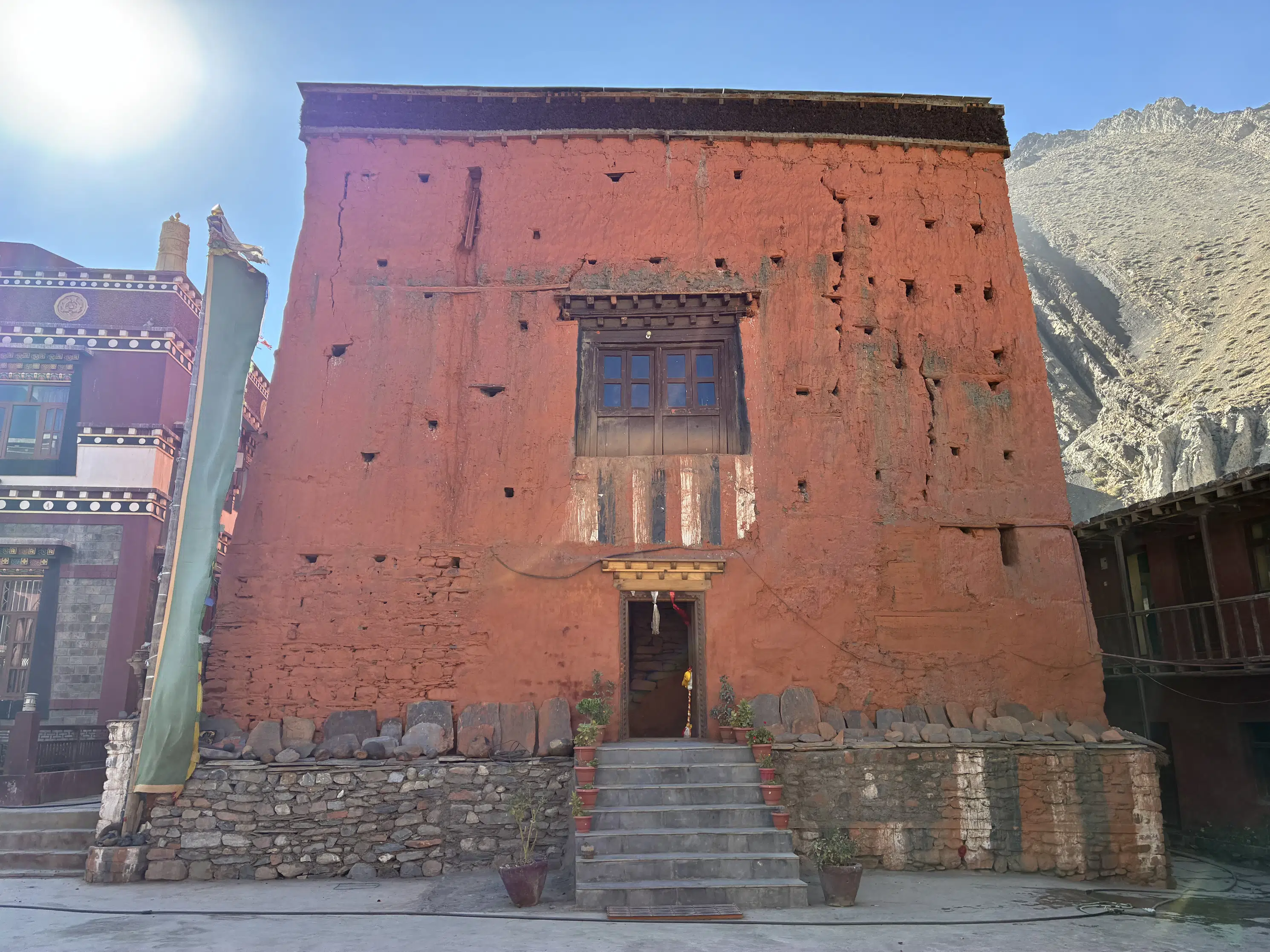
  • Explore Lo-Manthang: Visit the walled ancient city, monasteries, houses, and culture of the former royal capital of Upper Mustang.
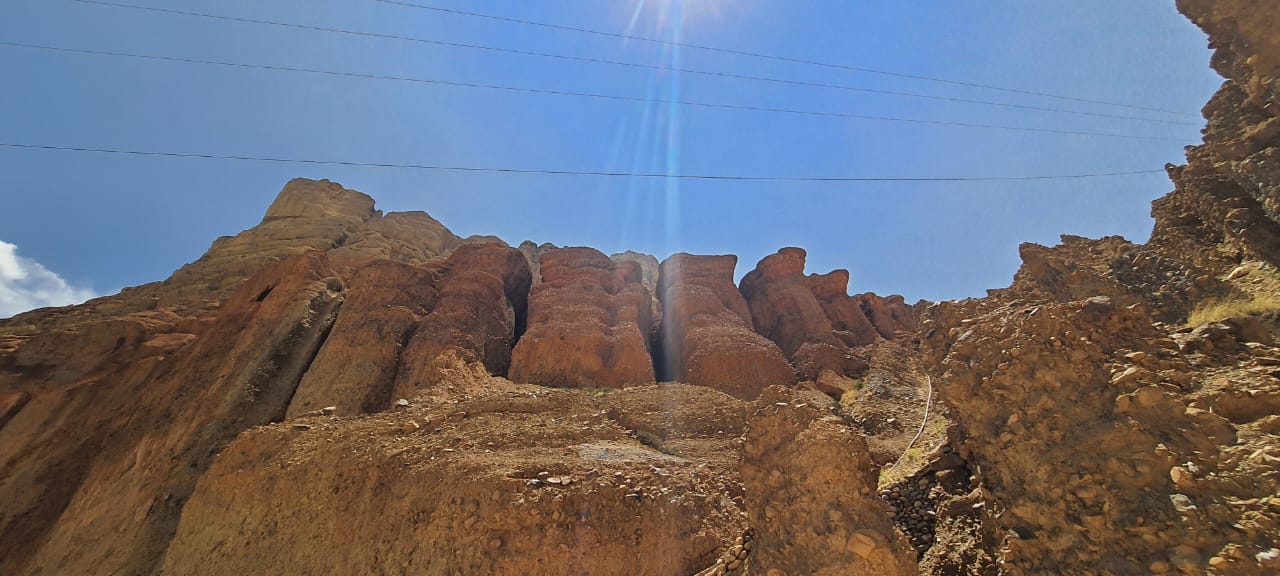
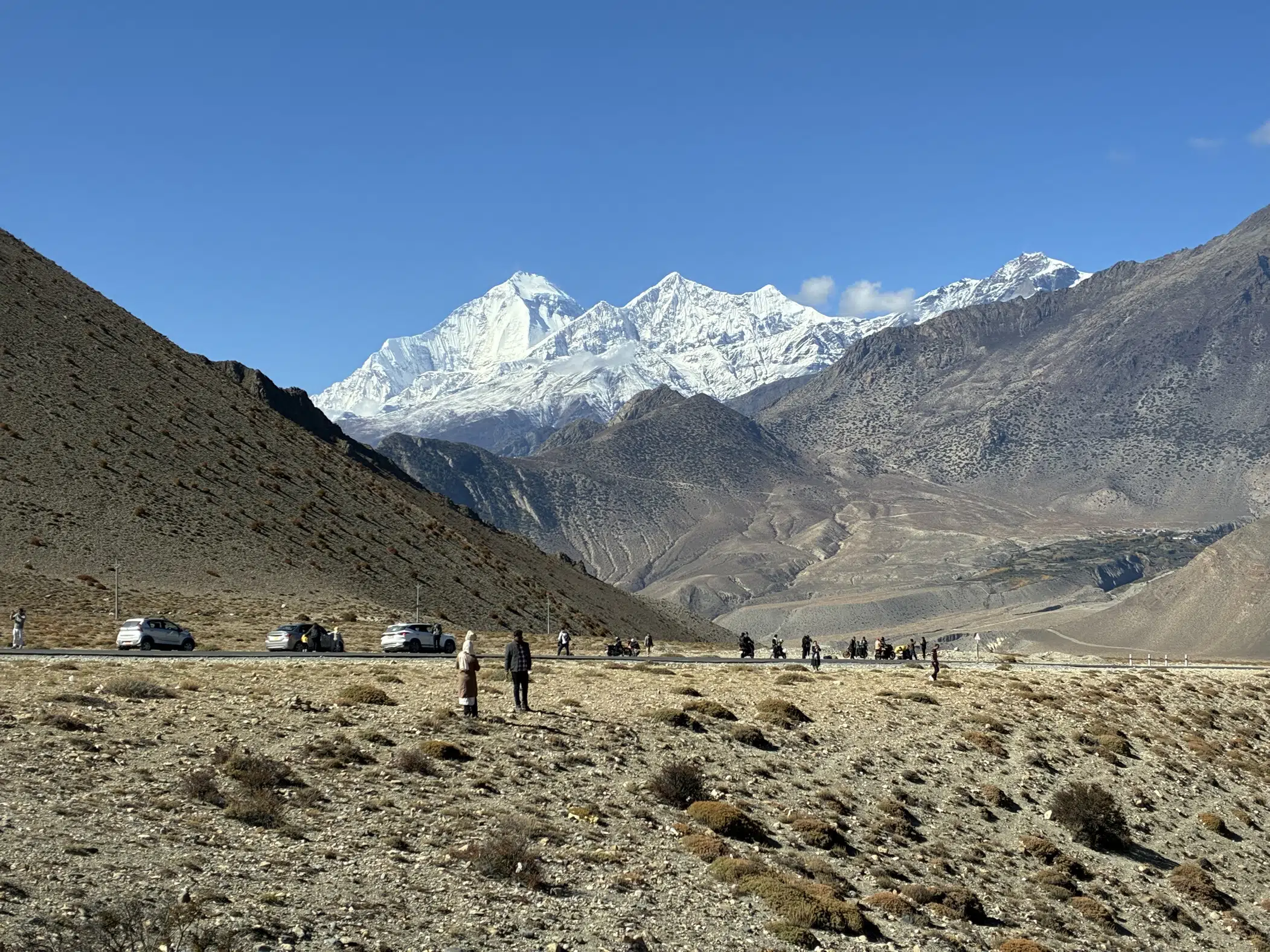
  • Trans-Himalayan terrain experience: Trek in the remarkable rain-shadow land, known for its barren peaks, valleys, red and ochre-colored cliffs and unusual rock formations.
  • Visit old Buddhist monasteries: Explore century-old religious sites, chortens, mani walls, prayer flags and Buddhist paintings along your trail.
  • Explore the ancient caves of Mustang: Discover cave dwellings and unusual rock formations at Yara and Lo-Manthang.
  • Pass through traditional villages: Explore the architecture and culture of the settlements of Kagbeni, Chele, Ghami, Charang, Yara, Tangge, and Chhusang.
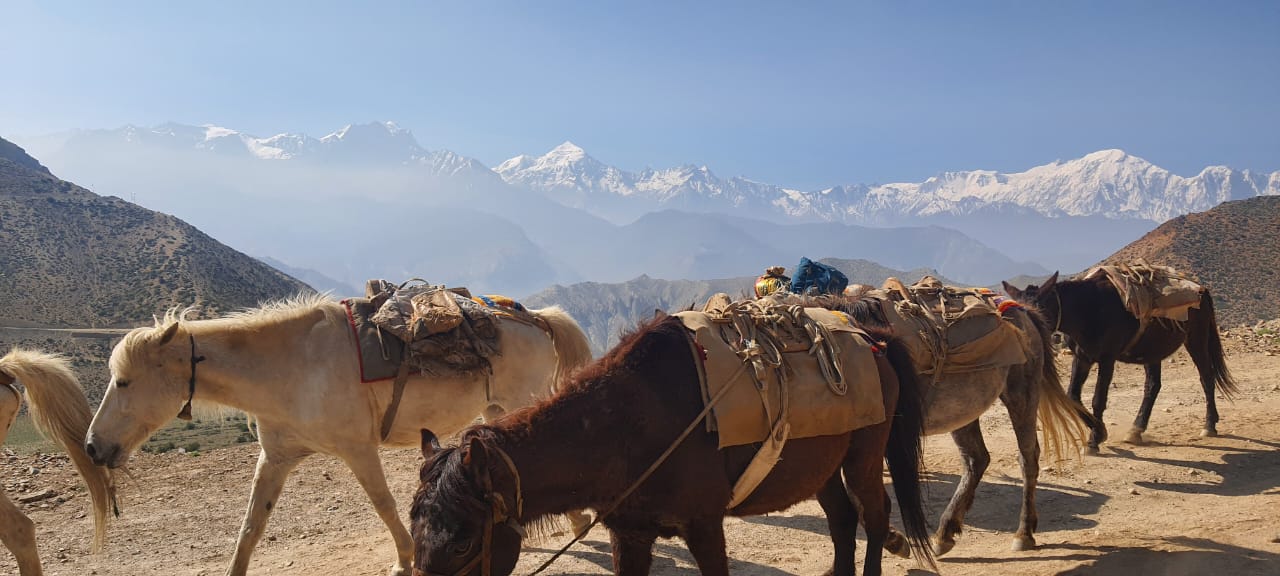
  • Cross over the high mountain passes: Enjoy the view of the surroundings while trekking across passes and trails between the remote settlements of Upper Mustang.
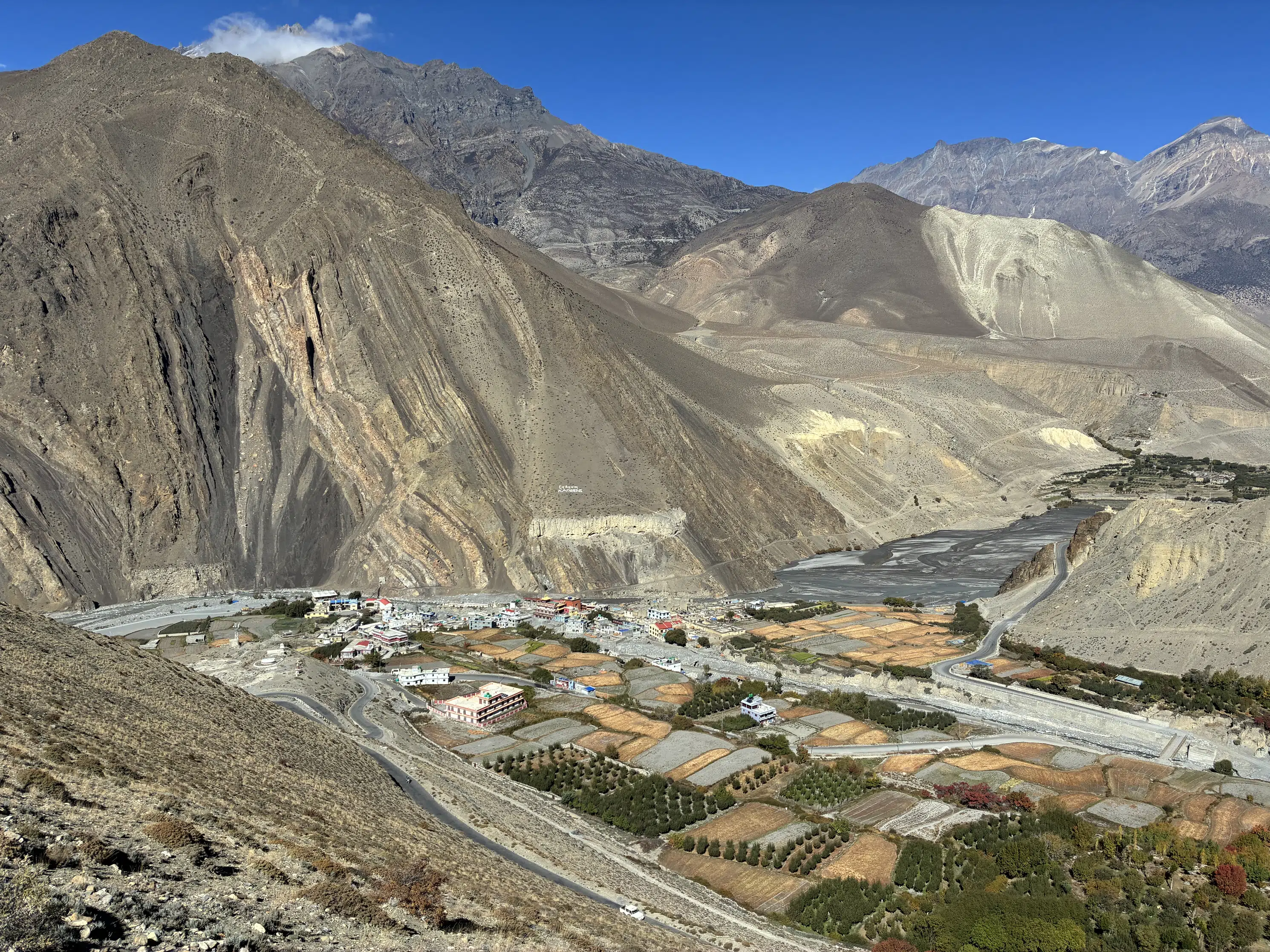
  • Kagbeni exploration: Discover the historical settlement, which serves as the starting point of the trek in the Upper Mustang area and situated in the valley of Kali Gandaki.
  • Explore the remote parts of Yara and Tangge: Trek in some of the remotest areas of Mustang and enjoy the exciting experience of viewing the high cliffs and dry valleys of Mustang.
  • Explore sacred Muktinath: Visit one of the most important pilgrimage destinations in the Himalayas that is revered both by Hindus and Buddhists due to its shrines, sacred springs, and the eternal flame.
  • Flyover of picturesque Jomsom-Pokhara: Take advantage of experiencing the spectacular scenery of the majestic Himalayan landscape and the surrounding mountain ranges.
  • Trekking in the rain-shadow area: The rainfall in Upper Mustang is considerably smaller than in other regions of Nepal, and therefore, it becomes an unusual trekking destination even during the monsoon season.
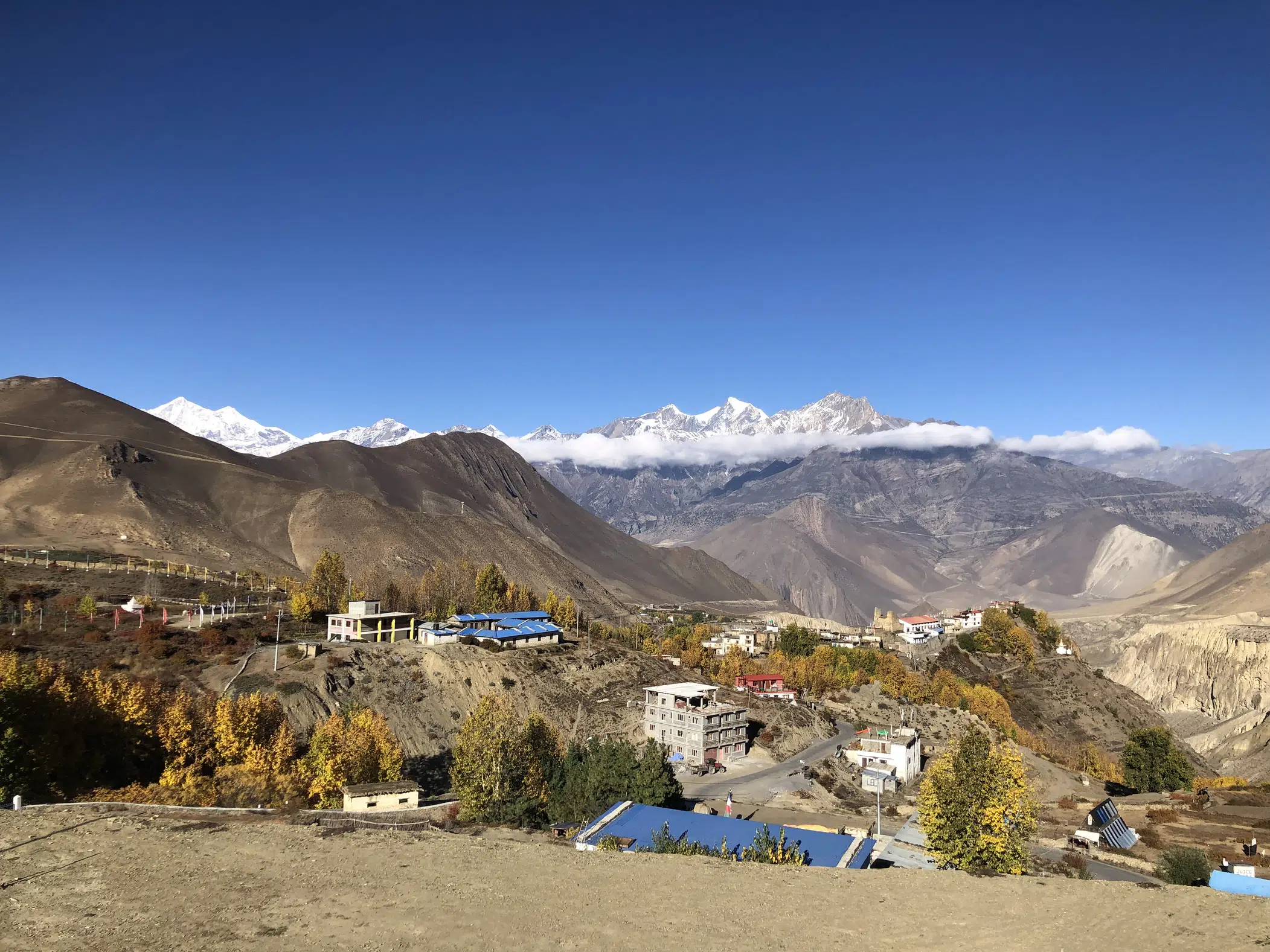
  • Trekking the Kali Gandaki valley: Enjoy walking through one of the most amazing Himalayan valleys connecting Lower Mustang and the high desert region of Upper Mustang. 

Overview

The 18-day Upper Mustang Trek takes you into the remote Himalayan landscape of Northwestern Nepal as you follow the trail passing through Kagbeni, Chele, Ghami, Charang, Lo-manthang, Yara Tangge, Chhusang, and Muktinath. This journey is also often described as passing through the landscape which resembles the Tibetan plateau because it is distinguished by its barren cliffs, wind-carved valleys, colorful rock formations, and monasteries alongside ancient caves and Tibetan-influenced villages.

Your journey on this trekking adventure begins with a flight from Pokhara to Jomsom and a trek through Kagbeni. Following this, you enter the restricted Upper Mustang region and a gradual entry into the former kingdom of Mustang, before eventually reaching Lo-Manthang - the historic walled capital and one of the key highlights of this region. A full exploration day in Lo-Manthang allows you to experience its ancient monasteries, traditional architecture, and distinctive Himalayan culture before continuing through the more remote settlements of Yara and Tangge.

After visiting Muktinath, you head towards Kagbeni and go to Pokhara via flight from Jomsom. As this trek is limited, you will have to acquire a trekking permit and follow the special guidelines of Upper Mustang.

Itinerary

Day 1: Arrival in Kathmandu

As soon as you land at Tribhuvan International Airport in Kathmandu, one of our team guides will be waiting for you to take you to your hotel. Once you reach there and check-in, you will get some rest. Based on your schedule, you can go around the neighboring streets of Kathmandu or the bustling Thamel area that is famous among travelers, restaurants, and trekking agencies. In the evening, you will be introduced to your trekking team and have a basic briefing about the Upper Mustang Trek. This trek leads you to one of the remotest and most distinctively unique areas of Nepal with a barren landscape, old monasteries, caves, and the culture of Tibetan Buddhism.

  • Travel Distance: Approximately 6 km from the airport to the hotel
  • Travel Hours: 20–40 minutes
  • Accommodation: 3-star hotel
  • Meals Included: Welcome dinner
Day 2: Trek Preparation and Briefing

This day is devoted to getting ready for your trek to Upper Mustang. After breakfast, you will meet with your trekking guide and the team for a briefing on the trail conditions, altitude, weather, safety measures, etc. The guide will also examine your trekking gear to ensure that you have all the equipment needed for the trek through the remote areas. As Upper Mustang is restricted for trekking, your team will see to it that all the permits and other documents are in place before you depart from Kathmandu. If you wish to, you can spend the remaining hours shopping for trekking gear in the trekking stores of Kathmandu.

  • Travel Distance: No significant travel
  • Travel Hours: As required for preparation
  • Accommodation: 3-star hotel
  • Meals Included: Breakfast
Day 3: Drive from Kathmandu to Pokhara by Tourist Bus

Following breakfast, you will set out for Pokhara from Kathmandu on the tourist bus. You will be on the Prithvi Highway in Nepal's hills that give you a wonderful view of the rivers, farmlands, forest, and villages along the way. Mostly, the trip will cover the valleys of the Trishuli River and then the valley of the Seti River. On arrival in Pokhara, a city nestled amidst the Himalayan mountains, you will have time to unwind and enjoy the lakeside area of Pokhara. If the weather is favorable, you can see the snow-capped peaks of the Annapurna range and also Fishtail mountain. You stay for the night in Pokhara after the journey. 

  • Travel Distance: Approximately 200 km
  • Travel Hours: 7–9 hours
  • Accommodation: Hotel
  • Meals Included: Breakfast
Day 4: Flight to Jomsom and Trek to Kagbeni

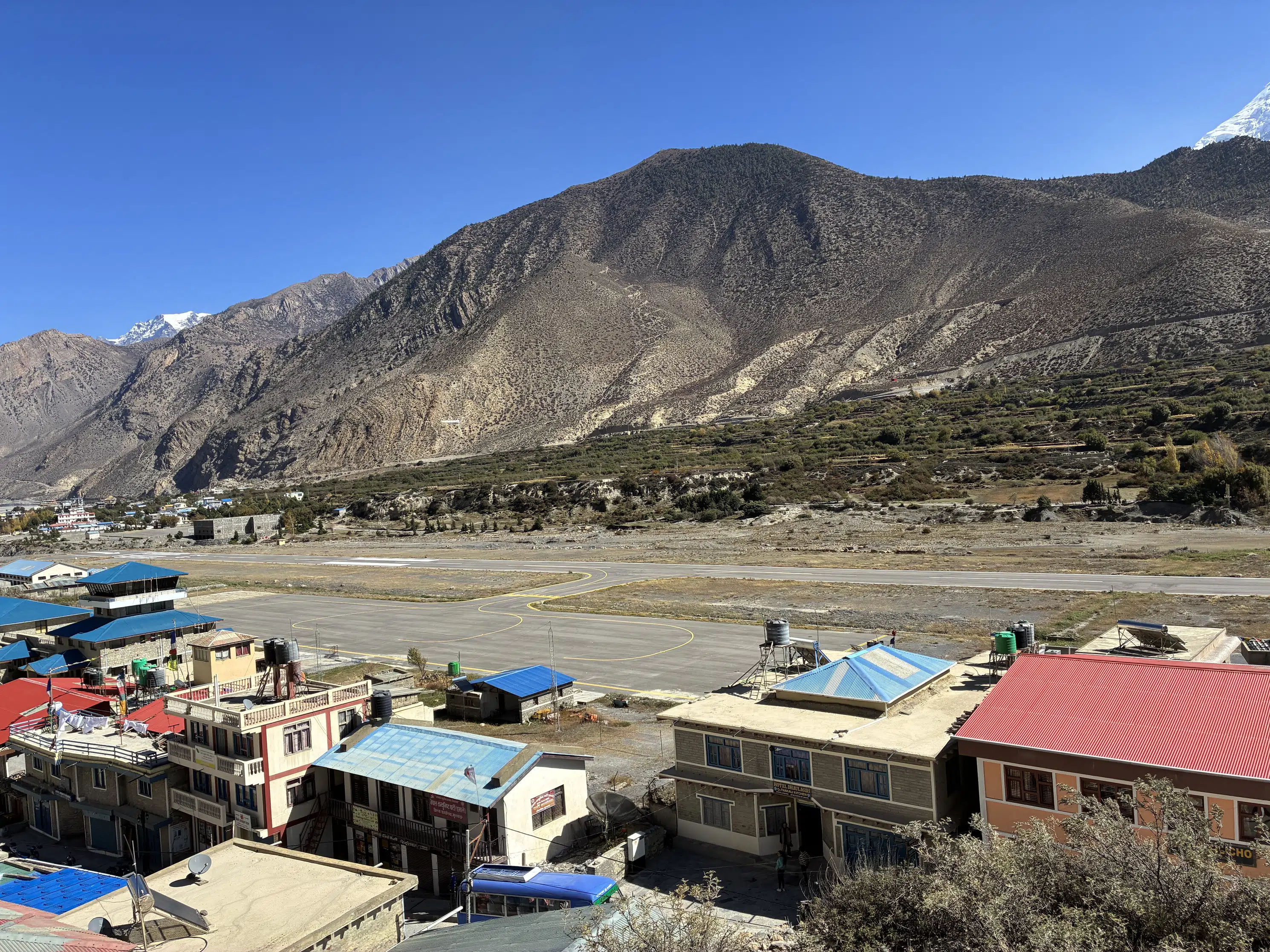
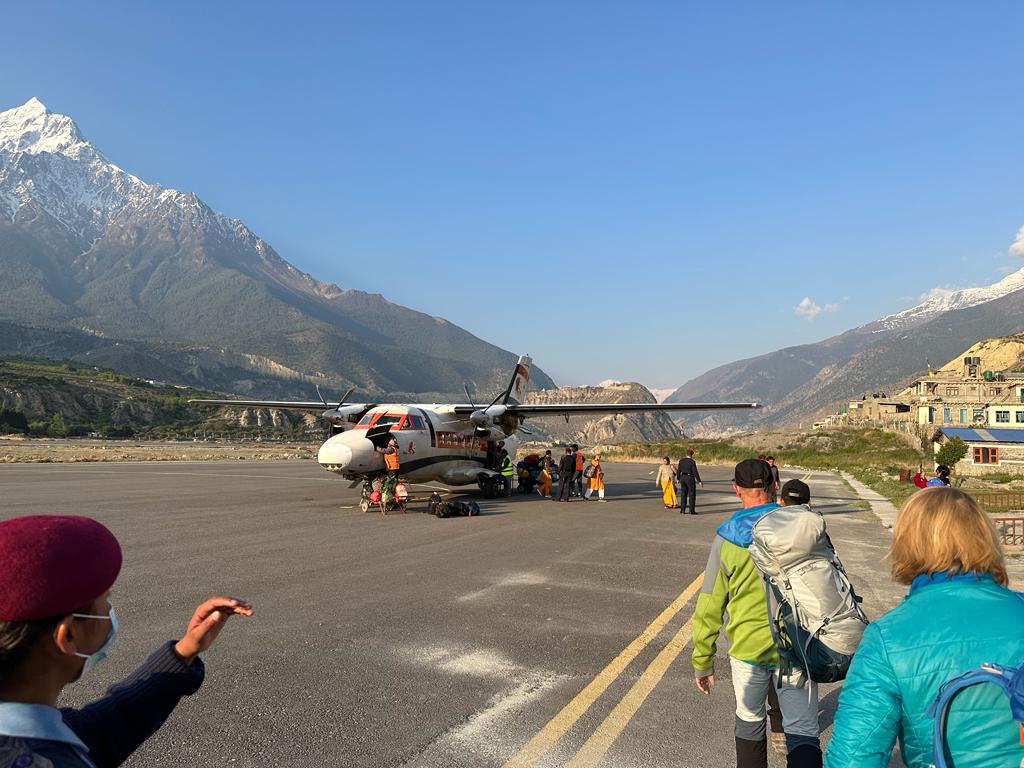
Your tour will take place in the morning, involving flying from Pokhara to Jomsom. Jomsom, the headquarter of Mustang district, is the name of a mountain village situated in the valley of the Kali Gandaki river, situated at an altitude of 2,700 meters above sea level. During the flight to Jomsom, you will be able to admire the view of the Annapurna and Dhaulagiri mountain ranges. On arrival in Jomsom and reunion with your trekking group, your hike will continue on the way to Kagbeni. Your route will be along the Kali Gandaki River in increasingly dry and desert-like scenery. Kagbeni is the ancient village of narrow streets, mud-brick houses, Buddhist prayer flags, etc. The village also serves as the entrance to the Upper Mustang restricted zone.

  • Travel Distance: Approximately 13 km
  • Travel Hours: 3–4 hours trekking, plus flight
  • Accommodation: Teahouse
  • Meals Included: Breakfast, Lunch, Dinner
Day 5: Trek from Kagbeni to Chele

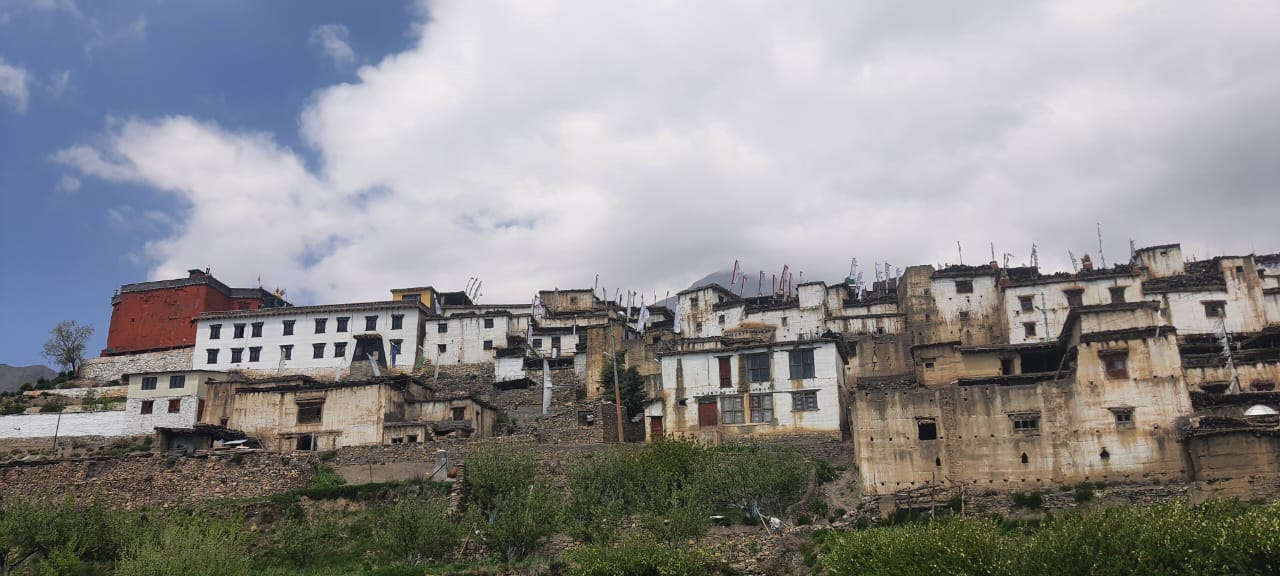
Following your breakfast, you shall leave Kagbeni and enter the Upper Mustang area officially. From here onwards, the path climbs into the upper regions through Kali Gandaki Valley. This section of the journey includes passing through some of the most interesting landscapes that are characterized by rocky cliffs, dry hills, and wind-sculpted formations. During the course of the walk, you may also come across some of the oldest chortens, mani walls, prayer flags, and other Buddhist architecture that is inspired by the Tibetan culture of Mustang. There will be several ascents and descents on the way before reaching Chele village. The village is distinguished by traditional stone and mud-brick buildings and barren hills surrounding it.

  • Travel Distance: Approximately 15 km
  • Travel Hours: 5–6 hours
  • Accommodation: Teahouse
  • Meals Included: Breakfast, Lunch, Dinner
Day 6: Trek from Chele to Syanboche

For today's trekking, you would need to walk into the far-flung reaches of Upper Mustang. You would have to ascend through Chele towards Syanboche by crossing a few mountain passes on your way. You will be offered amazing views of the Himalayan landscape around. If the weather permits, you will even have views of the distant ranges of Annapurna and Nilgiri. The landscape features barren hills, steep valleys, cliffy mountains, and a lack of vegetation. You will pass through the villages and monuments of the local Buddhist culture. The ascent and descent along the trail will create some challenges for you, especially since you will continue gaining height. Once you get to Syanboche, you will be able to relax and enjoy the tranquil ambience of the remote village. 

  • Travel Distance: Approximately 11 km
  • Travel Hours: 5–6 hours
  • Accommodation: Teahouse
  • Meals Included: Breakfast, Lunch, Dinner
Day 7: Trek from Syanboche to Ghami

Today you will be on your way to Ghami, which is one of the bigger villages in the Upper Mustang region. The trail will go through some high passes such as Yamda La and will run through some colorful hills with colors like red, brown, gray, and yellow. These strange-looking geological sites are some of the most distinctive elements of the Mustang landscape. You will come across some mani walls, chortens, prayer flags, and some small settlements, which are all indicative of the region's Tibetan Buddhist culture. Gham is distinguished by having a long mani wall, which is marked with prayer stones. 

  • Travel Distance: Approximately 12 km
  • Travel Hours: 5–6 hours
  • Accommodation: Teahouse
  • Meals Included: Breakfast, Lunch, Dinner
Day 8: Trek from Ghami to Charang

After having your breakfast, you will set out for your walk from Ghami to Charang, which is also known as Tsarang. The trekking route will initially take you downhill to Ghami Khola and thereafter uphill along a steep mountain pass. During your trekking, you will get to see some stunning cliffs, strange rocks, old caves, chortens, and several other Buddhist structures. The changes in terrain mentioned above clearly depict the distinctive geology of the Upper Mustang region. Charang is a culturally significant site that once served as the second largest city in the former Kingdom of Mustang next only to Lo-Manthang. Some of the highlights of the village are the old monastery, white-washed houses, and the magnificent five-storied palace.

  • Travel Distance: Approximately 11 km
  • Travel Hours: 4–5 hours
  • Accommodation: Teahouse
  • Meals Included: Breakfast, Lunch, Dinner
Day 9: Trek from Charang to Lo-Manthang

On this day, you will set out for the Lo-Manthang tour, which is referred to as the cultural hub of Upper Mustang. To make this happen, you will traverse through the route that starts from Lo-La Pass. In this way, you will get the opportunity of enjoying the beautiful surroundings along with the arid region of Mustang. Following the Lo-La Pass, your trekking route will head down to Lo-Manthang, which once was the capital of the Kingdom of Mustang and is still a significant place in terms of history. The trek to Lo-Manthang is truly one of the most unforgettable treks in the world as you see an ancient village in the middle of the desolate Himalayan landscape. 

  • Travel Distance: Approximately 13 km
  • Travel Hours: 5–6 hours
  • Accommodation: Teahouse
  • Meals Included: Breakfast, Lunch, Dinner
Day 10: Exploration of Lo-Manthang

Today is the day when you will find out about the different cultural and historical spots in Lo-Manthang. You can explore the historic city of Lo-Manthang by walking through its narrow lanes and look at the important monasteries such as Jampa Lhakhang, Thubchen Monastery, and Chodey Monastery. These sites have traditional paintings, sculptures, murals, and other cultural artifacts of Buddhism. There is also an opportunity for you to see the former Royal Palace and witness the traditional architecture of the town. On the basis of time and conditions, you might even have the chance to see the nearby villages like Chhoser, which is famous for the ancient caves and cliff-cut monasteries. This exploration day gives you the chance to learn about the ancient Tibetan Buddhist culture of Upper Mustang. 

  • Travel Distance: Depends on exploration activities
  • Travel Hours: Full-day exploration
  • Accommodation: Teahouse
  • Meals Included: Breakfast, Lunch, Dinner
Day 11: Trek from Lo-Manthang to Yara

After your breakfast, you will depart from Lo-Manthang and start the trek to Yara, which is a remote settlement in the region. The trek will not follow the usual route of the Upper Mustang Trek, and rather you will take a path that leads you away from the main trail of the region. You will first climb through Dhi La Pass before going downhill to Kali Gandaki Valley through the rough terrain of the region. The route will lead you through the dry cliffs, valleys, and strange formations of rocks due to erosion that took place hundreds of years ago. Some of the unique features of this section of the route are caves that are cut in the soft cliffs and have been used by the people for many purposes. 

  • Travel Distance: Approximately 17 km
  • Travel Hours: 6–7 hours
  • Accommodation: Teahouse
  • Meals Included: Breakfast, Lunch, Dinner
Day 12: Trek from Yara to Tangge

Today’s trekking adventure will be one of the more remote and challenging parts of the trekking experience. You will travel from Yara on a rugged and challenging trek through arid valleys to the town of Tangge. You will make a number of climbs and descents, enjoying the magnificent views of the surrounding terrain, which includes towering cliffs, rocky ridges, and the vast landscapes of the Himalayas. You will have to cross a number of small rivers and will trek over remote trails with few facilities available for travelers. This will be an indication of the remote location of Upper Mustang and how the people have adapted to such conditions. At the end of today’s trek, you will reach the remote location of Tangge, a settlement located within barren hills.

  • Travel Distance: Approximately 17 km
  • Travel Hours: 7–8 hours
  • Accommodation: Teahouse
  • Meals Included: Breakfast, Lunch, Dinner
Day 13: Trek from Tangge to Chhusang

After breakfast, you shall set off from Tangge and proceed towards Chhusang via another isolated stretch of Mustang. Your trek involves steep climbs, descents, and other rugged sections of the mountain. The natural beauty found here ranges from magnificent cliffs, arid gorges to colorful rock formations. As you start your journey down the valley of the Kali Gandaki river, there is a sense that change in landscape is approaching as the appearance of vegetation becomes clear. Chhusang is famous for its red ochre cliffs as well as caves and traditional houses. Chhusang, being located in the historic Kali Gandaki passage, has been a significant village in this area. 

  • Travel Distance: Approximately 17 km
  • Travel Hours: 6–7 hours
  • Accommodation: Teahouse
  • Meals Included: Breakfast, Lunch, Dinner
Day 14: Trek from Chhusang to Muktinath

Today you will make a journey towards Muktinath, which is one of the most prominent destinations for pilgrimage in the Himalayas. Your trekking route will gently ascend through the Kali Gandaki Valley, crossing various traditional villages and arid landscapes of mountains en route. Muktinath is an extremely sacred place for the followers of both Hinduism and Buddhism. Muktinath is known for the Muktinath Temple, its natural springs, and an eternal flame that is said to be fed by gas coming from underground. Once there, you can explore the holy temple complex and watch pilgrims coming from Nepal, India, and other places in the region.

  • Travel Distance: Approximately 14 km
  • Travel Hours: 5–6 hours
  • Accommodation: Teahouse
  • Meals Included: Breakfast, Lunch, Dinner 
Day 15: Trek from Muktinath to Jomsom

Upon having your breakfast, you will continue with the final phase of your trekking adventure as you trek downhill from Muktinath towards Jomsom. During your trek, you will pass through the Kali Gandaki valley, amidst traditional mountain settlements, which are becoming greener due to increased vegetation, depending on your selected route. There can be villages like Jharkot and Marpha that are popular for their traditional architecture and farming. The contrast between the dry climate of the upper part of the Mustang area and the greener valley below becomes evident with every single step you make. Finally, you will reach Jomsom, which is the administrative and commercial hub of the Mustang area.

  • Travel Distance: Approximately 20 km
  • Travel Hours: 6–7 hours
  • Accommodation: Teahouse
  • Meals Included: Breakfast, Lunch, Dinner
Day 16: Flight from Jomsom to Pokhara

On the condition that the weather is good, you will have an early morning flight to Pokhara from Jomsom. During your flight in the Kali Gandaki Valley, you will have a wonderful experience of enjoying the magnificent view of the Annapurna and Dhaulagiri Mountains. After reaching Pokhara, you will be transferred to the hotel, and then the remaining part of the day will be completely free for you after trekking. You can take your free time either by walking leisurely along the calm Lakeside area or watching the beautiful scenery of Phewa Lake. Alternatively, you can choose to spend the entire time resting in the hotel after the arduous trekking journey.

  • Travel Distance: Approximately 160 km by road, equivalent but traveled by air.
  • Travel Hours: 20–30 minutes by flight
  • Accommodation: Hotel
  • Meals Included: Breakfast
Day 17: Drive from Pokhara to Kathmandu

After having breakfast, you will depart from Pokhara to Kathmandu via tourist bus. During the course of the drive, you will traverse through the highways that meander through the mid hills of Nepal. The trip will include rivers, terraces, agricultural lands, forest areas, and villages on either side of the road as you make your way towards the Kathmandu valley. After you arrive in Kathmandu, you will be checked into your hotel, after which your entire day will be free to spend as you wish. One possible option for you would be spending your last night in Thamel, a part of Kathmandu known for its Nepalese merchandise stores and Nepalese cuisine restaurants.

  • Travel Distance: Approximately 200 km
  • Travel Hours: 7–9 hours
  • Accommodation: 3-star hotel
  • Meals Included: Breakfast
Day 18: Final Departure

This is the last day of your trip to Upper Mustang in Nepal. According to your time of departure, you may have free time to spend either in the hotel or in Kathmandu. You shall be dropped off at Tribhuvan International Airport, from where you shall depart from Nepal. On leaving Nepal, you will be filled with memories of the awe-inspiring Himalayan scenery, the old monasteries, cave systems that are centuries old, mountain villages, and the unique Tibetan culture of Upper Mustang. From the Kali Gandaki Valley and Kagbeni to the old walled city of Lo-Manthang and Muktinath, your tour provides an excellent mixture of nature and culture along with Himalayan adventure. 

  • Travel Distance: Approximately 6 km to the airport
  • Travel Hours: 20–40 minutes
  • Meals Included: Breakfast

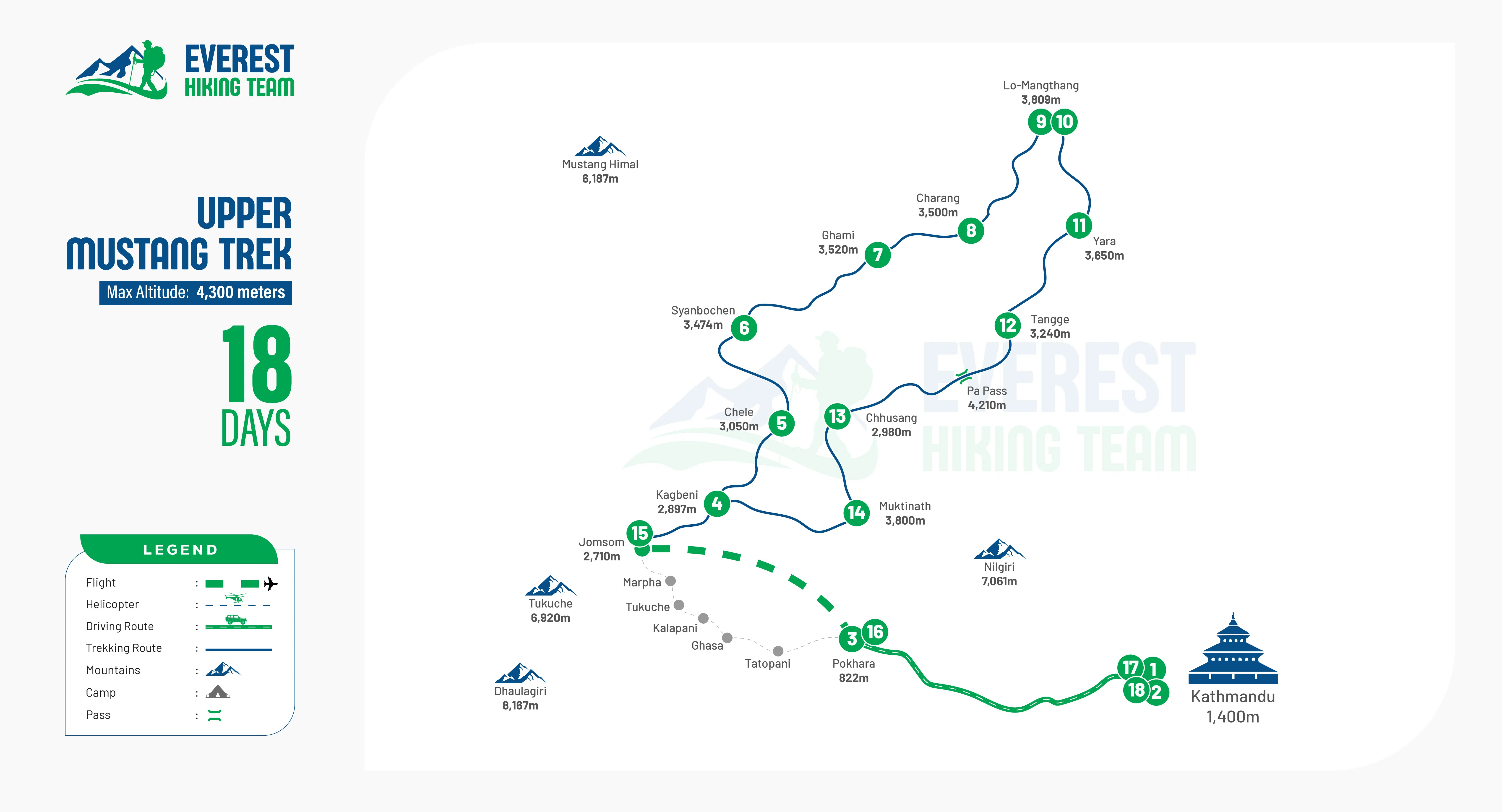
Trek Route

Upper Mustang Trek 18 Days route image

What's included

  • Airport pickup and drop-off by private vehicle.
  • 3 Nights hotel accommodation in Kathmandu.
  • 2 Nights Hotel accommodation in Pokhara.
  • Teahouse accommodation throughout the trekking period.
  • Welcome dinner in Kathmandu.
  • Breakfast in hotels while in Kathmandu and Pokhara.
  •  All Meal (Breakfast, lunch,dinner with 3 Cup of tea/coffee) during the trekking period.
  • Transfer in tourist buses from Kathmandu-Pokhara-Kathmandu.
  • Flights from Pokhara-Jomsom-Pokhara .
  • Upper Mustang Restricted Area Permit and other trekking permits.
  • Licensed and experienced trekking guide.
  • One Porter for two trekkers during the trek.
  • Trekking guide salary, insurance, food, and accommodation of the guide and porters.
  • Services of first aid and equipment from the trekking company.
  • All government taxes and levies.
  • Trekking map.

What's excluded

  • Ticket for your flight from your native country to Nepal.
  • Costs for visa while traveling to Nepal.
  • Travel insurance to be covered by you, including evacuation by air ambulance and helicopter.
  • Your personal trekking gear and attire.
  • Food and beverages during your stay in Kathmandu and Pokhara. 
  • Food and beverages not included in Cost Includes. 
  • Personal costs including snacks, drinks, internet charges, battery charging, laundry, and phone bills.
  • Entry fees to the monastery, museum, temple, and other sightseeing tours.
  • Tips for Guide, porters, drivers.
  • Extra cost of accommodation and transportation due to any flight delay/cancellation, unfavorable weather conditions, poor road conditions, illness, or any other unexpected situations.
  • Travel expenses arising out of changes to the itinerary that cannot be controlled by the trekking company. 
  • All other costs or services not listed under the Cost Includes section

Packing List

Packing the right way is very important for the 18-day Upper Mustang Trek, as the trek involves dry, windy, and high-altitude areas where there will be variations in temperature. It is important to pack clothes that suit trekking, appropriate footwear, and also sun protection as well as health and safety-related items. The following is a packing list for the trek

Clothing (Layering System)

  • Lightweight moisture-wicking T-shirts
  • 2 thermal base-layer tops and bottoms
  • 2–3 trekking shirts, preferably quick-dry
  • 2 pairs of quick-dry trekking pants
  • 1 pair of warm or insulated trekking pants for colder evenings
  • Fleece jacket or warm mid-layer
  • Lightweight down or insulated jacket
  • Waterproof and windproof shell jacket
  • Warm hat or beanie
  • Sun hat or cap
  • Neck gaiter or buff, especially useful against Mustang's strong winds and dust
  • Lightweight gloves
  • Warm insulated gloves
  • Lightweight rain jacket or poncho
  • 4–6 pairs of trekking socks, preferably wool or moisture-wicking
  • 2–3 pairs of liner socks for additional comfort
  • Comfortable sleepwear

Footwear

  • Well-broken-in trekking boots with good ankle support and waterproof protection
  • Comfortable sandals or camp shoes for evenings
  • 4–6 pairs of trekking socks
  • 2–3 pairs of liner socks
  • Gaiters, particularly useful for dusty, rocky, or muddy sections

Trekking Gear

  • 50–70L duffel bag or backpack for your main luggage
  • 25–35L daypack for daily essentials
  • Sleeping bag rated around -10°C to -15°C
  • Trekking poles for steep ascents and descents
  • Headlamp with spare batteries
  • Water bottles or hydration bladder with at least 2L capacity
  • Water purification tablets or a portable water filter
  • Dry bags or waterproof pack liners
  • Small backpack rain cover
  • Sunglasses with good UV protection
  • Trekking towel

Personal Items

  • Sunscreen with SPF 50+ protection
  • SPF lip balm
  • Toothbrush and toothpaste
  • Biodegradable soap
  • Hand sanitizer
  • Wet wipes or baby wipes
  • Toilet paper
  • Quick-dry towel

Personal toiletries

  • Small first-aid kit
  • Blister plasters
  • Reusable water bottle
  • Small waste bags for carrying personal waste

Health and Safety

  • Prescription medicines for personal use
  • Basic pain-relief medication
  • Medication for altitude sickness, after consulting your doctor
  • Electrolytes or oral rehydration salts
  • Bandages and blister treatment
  • Antiseptic or disinfectant
  • Insect repellent
  • Basic stomach and digestive medication
  • Personal medical information and emergency contacts
  • Travel insurance details and emergency assistance information

Electronics

  • Mobile phone and charging cable
  • Power bank, preferably 10,000–20,000 mAh
  • Universal travel adapter
  • Camera and accessories, if desired
  • Spare camera batteries or memory cards
  • Headlamp batteries
  • Charging cables for all essential devices
  • Small waterproof pouch for electronics

Optional but Useful

  • Energy bars, chocolates, nuts, and other lightweight snacks
  • Thermos flask for hot drinks
  • Binoculars for viewing mountains and wildlife
  • Camera or compact action camera
  • Book or Kindle for evenings
  • Small duffel-bag lock
  • Earplugs
  • Travel pillow
  • Trekking gaiters
  • Small notebook and pen

Important Documents

  • Passport valid for at least 6 months
  • Valid Nepal visa or visa documentation
  • Upper Mustang trekking permit documentation, arranged through the trekking agency
  • Travel insurance covering high-altitude trekking and emergency evacuation
  • Passport-size photographs, if required
  • Copies of passport and insurance documents
  • Flight tickets and booking confirmations
  • Emergency contact information
  • Some Nepali rupees in cash, as card and ATM facilities are limited in remote areas.

Essentials for Upper Mustang's Climate

  • Sun hat and high-quality UV-protection sunglasses
  • SPF 50+ sunscreen and SPF lip balm
  • Windproof outer shell
  • Warm down or insulated jacket
  • Thermal base layers
  • Lightweight and insulated gloves
  • Buff or neck gaiter for wind and dust
  • Moisture-wicking trekking socks
  • Reliable water bottles or hydration system
  • Dust protection such as a buff or lightweight face covering
  • Extra layers for cold mornings and evenings

Frequently Asked Questions

How difficult is the 18 Days Upper Mustang Trek?

The 18 Days Upper Mustang Trek is moderate to hard because of its high elevation and rough terrain. There will be quite a number of steep ascents and descents in the remote places of Yara and Tangge. Good physical conditioning is necessary for your comfort during this trek.

What is the highest altitude achieved in the Upper Mustang Trek?

The highest altitude that can be attained in this trek lies somewhere between 4,200 – 4,300 meters above sea level. You are going to steadily climb while trekking from Kagbeni to Lo-Manthang and to the remote areas beyond it.

Is there a special permit needed for Upper Mustang Trek?

Yes, as Upper Mustang is a restricted trekking area, all foreign trekkers require a special permit for the Upper Mustang Trek, in addition to a normal conservation area permit. This trek follows certain restrictions as per the region's regulations. It is generally the job of your trekking company to sort out everything regarding the permit for you.

What is the best time for the Upper Mustang Trek?

The best seasons for the Upper Mustang Trek are generally spring and autumn, particularly from March to May and September to November. Because Upper Mustang lies in the rain shadow of the Annapurna and Dhaulagiri ranges, it receives considerably less rainfall than many other parts of Nepal and can also be suitable during the monsoon. However, weather can be unpredictable; therefore, trekkers must be ready for any kind of windy, cold, or mountain weather changes.

What kind of accommodation will I have on the Upper Mustang Trek?

Trekking arrangements would be available at local teahouses and lodges. In remote places such as Yara and Tangge, the facilities would generally be less luxurious than those in larger villages. The rooms would be basic and could have bathrooms/showering facilities and charging, or lack hot water.

Is Upper Mustang Trek recommended for first-time trekkers?

It can be done by a first-timer who has the necessary level of physical endurance and is well-prepared for hiking at high altitudes. However, remote sections and challenging terrain, as well as few facilities, will make the trekking more challenging than usual treks in Nepal. Multi-day trekking experience is preferable but not necessary if trekking with an experienced guide.

Will I be able to do Upper Mustang Trek in the monsoon period?

Upper Mustang can be regarded as one of the most suitable places for trekking in the monsoon because it is located in Nepal's rain-shadow zone. It means that this place is not as rainy as Annapurna Base Camp and Everest. However, flights to and from Jomsom can still be affected by weather, so some flexibility should be maintained in the itinerary.

User Review