Nar Phu Valley Trek-13 days

Tour Info

Trip code

E-026

Starting Point/ End Point

Kathmandu

Accommodations

Lodge/ Tea House

Max Altitude

5320

Duration

13 days

country

Trip grade

Challenging

Best Season

Spring (March–May) and Autumn (September–November)

Highlights

  • Explore the remote and untouched Nar and Phu Valleys, one of Nepal's hidden Himalayan regions.
  • Visit local Tibetan Buddhist communities and appreciate, their unique way of life, traditions and culture.
  • Cross the spectacular Kang La Pass (5,320 meters) with breathtaking mountain views.
  • Visit old monasteries, traditional stone villages, and Buddhist sites, that have been around for centuries.
  • Get amazing views of Annapurna II, Gangapurna, Tilicho Peak, Himlung Himal, and Chulu ranges.
  • Stay at teahouses run by the locals and get the warm hospitality of locals from the mountains.
  • Spot Himalayan wildlifes, such as blue sheep, Himalayan griffons, and, if you're lucky, the elusive snow leopard.
  • Travel on a less-crowded trekking route making it perfect for those, who are looking for a quiet Himalayan adventure.
  • Enjoy a perfect combination of adventure, natural beauty, cultural exploration, and high-altitude trekking in one unforgettable journey.

Overview

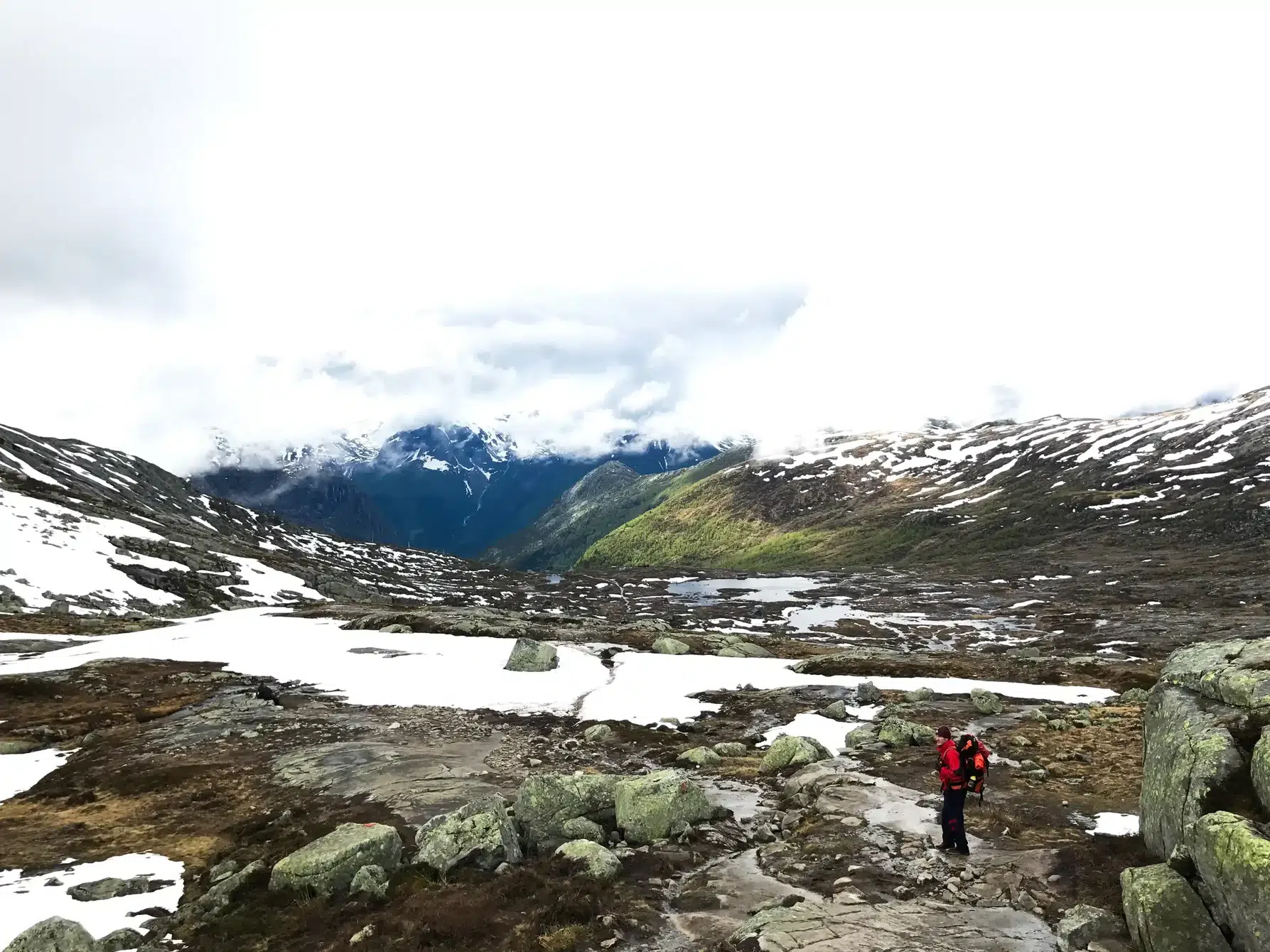
Nar Phu Valley Trek is considered as one of the most remote and secluded trekking routes in Annapurna. It is located between popular trekking destinations of Manaslu and Annapurna and offers wonderful views of mountains including Annapurna, Manaslu, Pisang Peak, Tilicho and many others. This hidden gem of Nepal will take you on a journey through remote villages, narrow gorges, green forests, rough paths, ancient gompas and monasteries thus providing a unique combination of nature and ancient Tibetan Buddhist culture. Nar Phu valley is open to foreign tourists only since 2003 and it is restricted area thus preserving the traditional lifestyle of its inhabitants. The trek begins with a drive from Kathmandu to Besisahar, then to Koto followed by the trekking path passing through Meta, Phu, Nar Phedi, Nar and then crossing Kang La Pass (5,240 m) which is the highest point of this trek. The return route leads through Ngawal and Pisang back to Besisahar and Kathmandu, making Nar Phu trek is great choice for adventurers who want to have a remote Himalayan experience in 2026 and 2027.

Itinerary

Day 1: Arrival in Kathmandu

On Day 1, you will arrive in Kathmandu.On Day 1 you will be in Kathmandu.
After arriving at Tribhuvan International Airport in Kathmandu, our representative warmly welcomes you and transfers you to your hotel. Once you have checked in and had some time to relax, you can explore nearby places if you arrive early and have time. If you want to start your journey to Nepal; you can also make a visit to the popular tourist area of Thamel or to Kathmandu Durbar Square; a UNESCO World Heritage site and historic settlement dotted with temples and palaces. In the evening, enjoy a traditional Nepali welcome dinner featuring local dishes such as dal bhat, momo, and sel roti. It's also a great chance to connect with your trekking guide and other trekkers, and to discover all about the adventure upcoming. Once you have dinner, head back to your hotel and enjoy a restful night before preparing for your trek on the next day.

  • Max Elevation: 1400 meters (Kathmandu)
  • Travel Distance: 6 to 8 kilometers
  • Travel Hours: 20 to 30 minutes
  • Accommodation: 3 Star Hotel
  • Meal: Dinner
Day 2: Preparation of Nar Phu Trek and Permit and Trek Briefing

This day is for making all the required preparations before you can depart for the trek. You will obtain your Annapurna Conservation Area Permit (ACAP) and Restricted Area Permit (RAP) from your trekking agency, which are essential to gain access to the Nar Phu Valley. This is also a good opportunity to look at your trekking equipment and purchase or rent any items you may be missing from the shops in Thamel. Once the permits have been collected, take the day to visit some of the cultural highlights of Kathmandu. If you want to see beautiful views of Nepal's city and the temple of Pashupatinath, one of the most important pilgrimage sites for the Hindu religion, you can stop at Swayambhunath (Monkey Temple). In the evenings, you will receive a detailed trek briefing in which you will learn about the trek route, schedule, safety, awareness of altitude, and more. 

  • Max Elevation: 1,400 metres (Kathmandu)
  • Travel Distance: 10 to 15 kilometers (city sightseeing)
  • Travel Hours: 4 to 5 hours
  • Accommodation: 3 Star standard Hotel
  • Meal: Breakfast, Lunch and Dinner
Day 3 : Drive to Besisahar and Dharapani

Your trek starts early in the morning from Kathmandu through Besisahar with a scenic drive to Dharapani. The route follows a paved highway until Besisahar, after which the road becomes rough and adventurous. Along the way, you'll enjoy beautiful views of rivers, terraced farmlands, green hills, waterfalls, and traditional villages. Occasional views of the Annapurna and Manaslu mountain ranges are also seen from the drive. After passing from Besisahar you will drive to Dharapani by private jeep, which is a bit off-road. Then, the road follows the Marsyangdi River, crossing suspension bridges and passing through small settlements before reaching Dharapani at an elevation of 1,860 metres. Once you arrive, check in at your tea house, have a hot meal, and then rest up for your first day of trekking.

  • Max Elevation: 1,860 metres (Dharapani)
  • Travel Distance: 230 Kilometers (Total Distance)
  • Travel Hours: 8 to 10 hours
  • Accommodation: Tea house /Lodge
  • Meal: Breakfast, Lunch and Dinner
Day 4 : Trek to Koto from Dharapani

After breakfast, begin your first day of trekking as you leave Dharapani and follow the trail towards Koto. The route passes through beautiful pine and rhododendron forests, traditional Tamang and Gurung villages, and peaceful mountain landscapes. As you walk further, you can also enjoy the stunning views of Lamjung Himal (6,983 meters), Annapurna II (7,937 meters), and Manaslu (8,163 meters). Trail follows the Marsyangdi River, crossing wooden bridges and passing several small waterfalls along the way. Permits for the Nar Phu Valley area are issued at a permit registration counter in Koto before entering the area. After reaching the village at 2,600 metres, check in to your tea house, enjoy a warm dinner, and rest for the exciting journey into the remote Himalayan valleys that begins the next day.

  • Max Elevation: 2,600 metres (Koto)
  • Travel Distance: 15 to 16 kilometers
  • Travel Hours: 6 to 7 hours
  • Accommodation: Tea house /Lodge
  • Meal: Breakfast, Lunch and Dinner
Day 5 : Trek to Meta from Koto

restricted area. The trail runs through dense forest, low gorges, waterfalls and a couple of suspension bridges along the Soti Khola. The scenery slowly transforms from green woods to dry cliffs and odd rock formations as you proceed to climb. Along the way, you can enjoy beautiful views of Annapurna II and Pisang Peak. From there, follow the path uphill and reach a small Tibetan village called Meta (3,560 metres), a winter home for the inhabitants of Nar village and the entrance point to the hidden valley of Nar Phu. In addition, Meta is also a starting point for climbers to do a trip to Kang Guru (6981 metres). The village offers basic tea house accommodation and stunning views of the surrounding snow-capped mountains, especially during sunset. After arriving, enjoy a warm meal and relax before continuing your journey further into the valley the next day.

  • Max Elevation: 3,560 metres (Meta)
  • Travel Distance: 19 to 20 kilometers
  • Travel Hours: 8 to 9 hours
  • Accommodation: Tea house /Lodge
  • Meal: Breakfast, Lunch and Dinner
Day 6 : Phu Village from Meta

You move further today to explore the remote Nar Phu Valley, traversing through deep gorges, alpine terrain and traditional Tibetan settlements. Along the way, you'll cross several suspension bridges over the Phu River while enjoying impressive views of Kang Guru (6,981 m) and Annapurna II. Trail also passes ancient chortens, unique rock formations, and peaceful mountain scenery before reaching Phu Village. Phu Village is located at 4080 metres altitude which is one of the most remote village in Manang District, it is a village where the traditional Tibetan culture and lifestyle are still well preserved. The village is surrounded by beautiful views of Himlung Himal, Kang Guru, the Annapurna range, and the Manaslu range. After arriving, visit the historic Tashi Lhakhang Monastery, which is believed to have been blessed by Guru Rinpoche. Phu is a place where you can experience the authentic Himalayan lifestyle; with its stone houses, colorful prayer flags and peaceful atmosphere. Spend the night at a local tea house and prepare, for your acclimatization day.

  • Max Elevation: 4,080 metres (Phu Village)
  • Travel Distance: 14 to 15 kilometers
  • Travel Hours: 7 to 8 hours
  • Accommodation: Tea house /Lodge
  • Meal: Breakfast, Lunch and Dinner
Day 7 : Acclimatization day in Phu Village

This crucial acclimatization day in Phu Village will give your body the chance to adjust to the high-altitude environment before you head further up the trail. After breakfast, take a short hike to the view point and visit old monasteries. The walk is rewarding without the whole steep gain in height and has fine views of the nearby snow covered peaks, Himlung Himal, Pokhar Kang and the mountains beyond. Once you are back in the village, you can enjoy the rest of the day to explore the culture of Phu Village. Take a walk through its traditional stone houses, interact with the local Tibetan and Bhote communities, and explore ancient monasteries and meditation caves, the enduring legacy of the region's Buddhist heritage. This is a good rest day for acclimatisation and also to experience the calm life of one of Nepal's most remote Himalayan villages before the trek proceeds.

  • Max Elevation: 4,350 metres (Viewpoint above Phu Village)
  • Travel Distance: 6 to 7 kilometers
  • Travel Hours: 3 to 4 hours
  • Accommodation: Tea house /Lodge
  • Meal: Breakfast, Lunch and Dinner
Day 8 : Trek to Nar village

After having breakfast, you leave Phu Village and begin the trek towards Nar Village. The trail descends before climbing gradually through the remote landscapes of the Nar Phu Valley. You will cross suspension bridges, pass ancient chortens and Mani Walls and walk through dry mountain terrain, enjoying landmarked Himalayan views along the way. As you get closer to Nar, the valley opens up, revealing wider landscapes, terraced fields, and beautiful mountain views. Located at 4,150 metres, Nar Village is a traditional Himalayan settlement, known for its rich Tibetan culture, stone houses, colourful prayer flags, and yak pastures. The village offers excellent views of Pisang Peak and Kang Guru; while providing an authentic insight into the lifestyle of the local people. There are also ancient monasteries in Nar and the Valley of Nar is an important cultural destination on the Nar Phu Valley trek. After exploring the village, enjoy a warm meal and spend the night at a local tea house before preparing to cross the famous Kang La Pass the next day.

  • Max Elevation: 4,150 metres (Nar Village)
  • Travel Distance: 14 to 15 kilometers
  • Travel Hours: 6 to 7 hours
  • Accommodation: Tea house /Lodge
  • Meal: Breakfast, Lunch and Dinner
Day 9 : Trek to Ngawal via Kangla Pass

This is the most challenging and rewarding day of the trek as you cross Kang La Pass (5,322 metres). The trek starts early in the morning and is a gradual uphill rise to the top of the climb. From the top of the pass, you can enjoy breathtaking panoramic views of Annapurna II, Gangapurna, Chulu East, Pisang Peak, and several other snow-covered Himalayan peaks. After enjoying a while at the pass, begin the tedious process of descending to Ngawal; which is where the barren mountain scenery gives way to lush green hills and pines. Situated at 3,675 meters, Ngawal is a picturesque traditional village in the Manang District and famous for its stone houses, Tibetan culture and the breathtaking view of the Annapurna range. The traditional way of living and serene environment of the village can be experienced through a visit to the monastery, which is the Buddhist temple located at the center of the village. Ngawal is also famous for its hospitable nature and agrarian lifestyle with cultivation of crops like barley, potatoes, and buckwheat. Following a busy day of hiking, unwind and take a well-deserved break at a nearby tea house.

  • Max Elevation: 5,322 metres (Kang La Pass)
  • Travel Distance: 16 to 17 kilometers
  • Travel Hours: 8 to 9 hours
  • Accommodation: Tea house /Lodge
  • Meal: Breakfast, Lunch and Dinner
Day 10: Trek to Manang

Once you have breakfast, you will head out of Ngawal and follow the picturesque path to Manang. The walk across Kang La Pass yesterday is now covered and today is less of the trek and only a gentle walk. The trail passes through peaceful villages, alpine meadows, and beautiful mountain landscapes while offering excellent views of Annapurna II, Annapurna III, Gangapurna, Tilicho Peak, and the surrounding Himalayan ranges. There will also be a meeting with traditional prayer wheels, mani walls, and cultivated fields along the way. At Manang (3,540 metres) you will have time to explore one of the biggest and most popular villages in the Annapurna region. The village features traditional stone buildings, bakeries, cafes, local shops, and monasteries, making it a comfortable place for a few days of rest after several days in the remote valley of Nar Phu. Take the night to enjoy the atmosphere of the mountain before spending the next day driving back towards Besisahar.

  • Max Elevation: 3,675 metres (Ngawal)
  • Travel Distance: 10 kilometers
  • Travel Hours: 3 to 4 hours
  • Accommodation: Tea house /Lodge
  • Meal: Breakfast, Lunch and Dinner
Day 11: Drive Back to Besisahar

After breakfast you leave Manang and start your drive back to Besisahar, moving along the scenic route. This is the route along the Marsyangdi river through beautiful mountain villages, waterfalls, forests, terraced fields, and deep river valleys. The views shift from high alpine to more green hills and farmland as you reach the lower end of the road. Some parts of the road are a bit rugged, but there is certainly a lot to enjoy the scenery from the Himalayan foothills along the way. After some hours of journey, you reach in Besisahar, the entry point to the Annapurna area. This vibrant town is the final destination on your mountain hike, and offers a welcoming spot to unwind after a lengthy day in the mountains. Stay the night at your tea house or lodge; have a hot dinner, and celebrate the successful completion of your Nar Phu Valley trek before heading back to Kathmandu the next day.

  • Max Elevation: 3,540 metres (Manang)
  • Travel Distance: 105 kilometers (Total Distance)
  • Travel Hours: 6 to 8 hours
  • Accommodation: Tea house /Lodge
  • Meal: Breakfast, Lunch and Dinner
Day 12: Drive to Kathmandu via Besisahar

Begin the return trip to Kathmandu with a comfortable drive from Besisahar. The route traces the Prithvi highway and goes through stunning river gorges, green hills, terraced fields, and small towns. As you travel beside the Marsyangdi and Trishuli Rivers, you can enjoy the changing scenery and reflect, on the unforgettable experiences of your Nar Phu Valley adventure. Once you have arrived in Kathmandu, you should check-in at your hotel and have some leisure time to spend relaxing or checking out the city. There are many locations to visit, souvenirs to purchase, or just a spot to relax after an expedition. In the evening, enjoy a farewell dinner, with authentic Nepali cuisine and celebrate the successful completion of your journey, before your departure the next day.

  • Max Elevation: 760 metres (Besisahar)
  • Travel Distance: 175 kilometers
  • Travel Hours: 6 to 7 hours
  • Accommodation: 3 Star Standard Hotel
  • Meal: Breakfast, Lunch and Dinner
Day 13: Final Departure

Enjoy your final breakfast in Kathmandu before checking out of your hotel. Depending on the time of your flight, our representative will transfer you to Tribhuvan International Airport for departure. Please arrive to the airport no later than 3 hours prior to your international flight. Finally, as you return from the 13-day Nar Phu Valley Trek, you will have some incredible memories to take home from Nepal; including remote village visits in the Himalayas, stunning mountain vistas, Tibetan culture, and crossing the Kang La Pass. Hope you enjoyed the experience, and we look forward to seeing you again, on your next adventure in Nepal. 

  • Max Elevation: 1,400 metres (Kathmandu)
  • Travel Distance: 6 to 8 kilometers
  • Travel Hours: 20 to 30 minutes
  • Meal: Breakfast

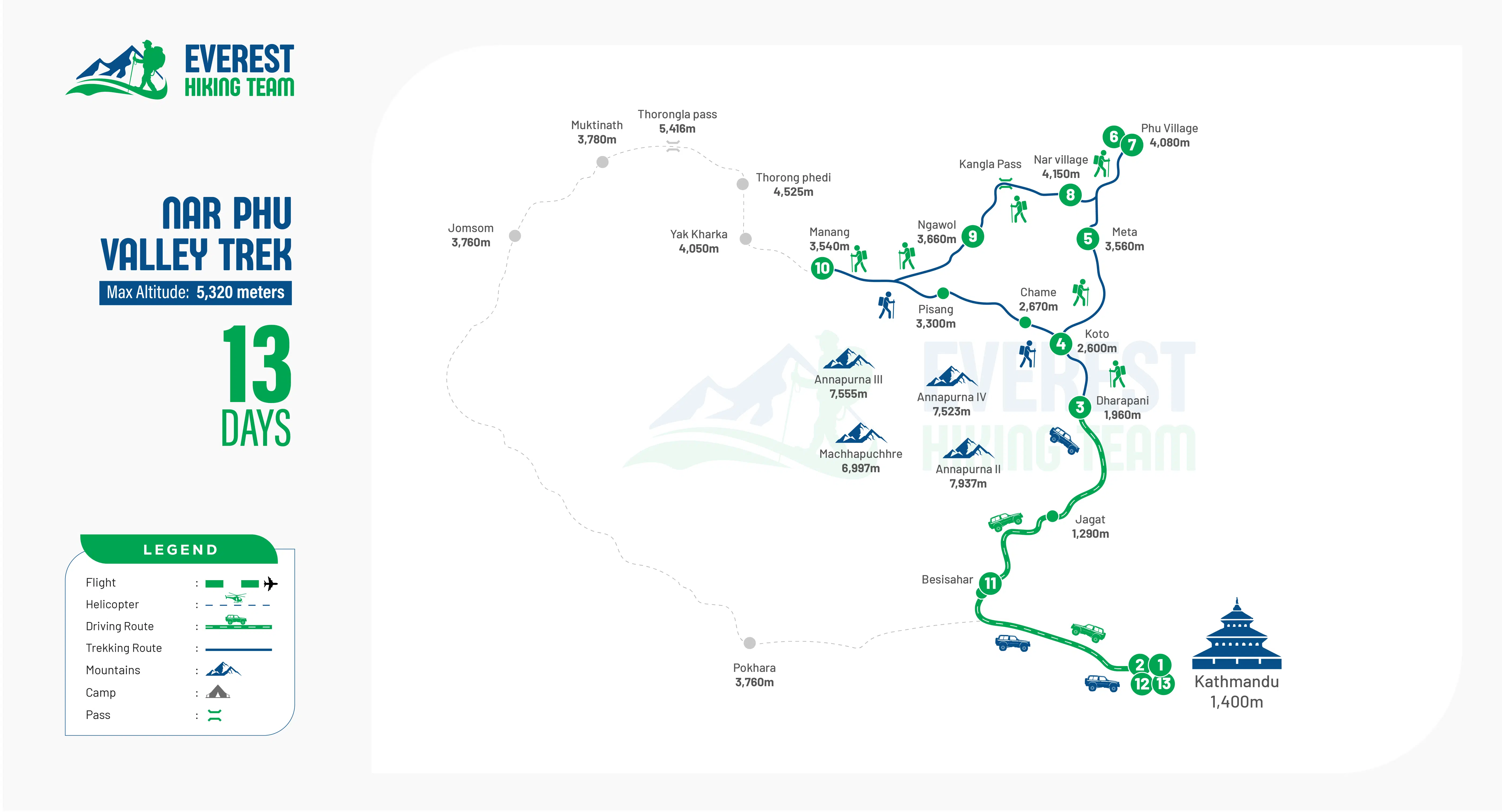
Trek Route

Nar Phu Valley Trek-13 days route image

What's included

  • Airport pickup from Kathmandu International Airport according to your arrival date and time
  • 3 nights' standard twin share hotel in Kathmandu (02 night prior to the trek and 01 night after the trek).
  • All ground transportation is on a comfortable private vehicle as per the itinerary
  • Daily breakfast, lunch, and dinner throughout the trekking period
  • Tea house/lodge accommodation during the Nar Phu Valley Trek
  • One English Speaking experienced trekking guide with salary, meals, accommodation, insurance, equipment, and expenses as needed.
  • Nar Phu Restricted Area Permit (RAP)
  • Annapurna Conservation Area Permit (ACAP)
  • Trekkers' Information Management System (TIMS) Card
  • All taxes paid to the government, including all service charges
  • Welcoming dinner in Kathmandu before you leave
  • Airport transfers to your last flight as per your flight schedule

What's excluded

  • Nepal entry visa fee
  • Airfare for international travel to and from Nepal.
  • Travel insurance (including emergency evacuation cover)
  • Entrance fees for sightseeing places in Kathmandu (approximately USD 25 per person)
  •  All meals in Kathmandu 
  • Personal cost incurred on the trail (Wi-Fi, hot showers, batteries, laundry, phone calls, bottled and alcoholic beverages, snacks, other personal expenses)
  • If you arrive in Kathmandu early or depart early from the trek, or return there early, you may need extra hotel days in Kathmandu
  • Luggage service for transporting luggage
  • Rental of personal trekking equipment
  • Tips for trekking guides and porters, which are highly appreciated but not compulsory
  • Any expenses caused by flight delays, road blockages, bad weather, natural disasters, political events, or other situations beyond our control

Packing List

A good trip to Nar Phu Valley is secured by carrying the right equipment to keep you both safe and comfortable. Since the trek takes you through remote villages and crosses high mountain passes, the weather can change quickly. Pack lightly, but bring warm clothing, waterproof equipment, and all the basics. Trekking equipment can be purchased or hired in Thamel, Kathmandu, where there are various outdoor stores that have high-quality gear at reasonable prices before you embark on your trek.

General Gear

  • 75-litre duffel bag
  • Down jacket
  • Four-season sleeping bag
  • Rain cover for daypack (35-45 litres)
  • Sleeping bag liner

Headwear

  • Sun hat or cap
  • Warm Knitted Hat or Beanie
  • Scarf or neck gaiter
  • Headlamp (extra batteries)
  • UV-protection sunglasses

Upper Body Clothing

  • Thermal base layers
  • 2 technical short-sleeve shirts
  • 2 technical long-sleeve shirts
  • Fleece jacket/ warm pullover
  • Waterproof and windproof jacket

Lower Body Clothing

  • Thermal base layer
  • 2 pair of hiking pants
  • Casual pants for the night time
  • Waterproof and windproof overpants
  • Hiking shorts

Hand Protection

  • Lightweight liner gloves
  • Insulated waterproof gloves

Footwear

  • Waterproof trekking boots
  • Hiking socks or warm wool socks
  • Liner socks (optional)
  • Lightweight casual shoes, sandals
  • Microspikes or ice cleats (recommended during colder months)
  • Gaiters for snowy or dusty trailsUndergarments

Undergarments

  • Quick-drying underwear
  • Sports bras (for women)
  • Sleepwear or pajamas

Personal First Aid & Toiletries

  • Sunscreen
  • Lip balm
  • Basic ointment
  • Personal medications
  • Toothbrush and toothpaste
  • Hand sanitizer and soap
  • Wet Wipes and Tissues

Important Documents & Essentials

  • Passport
  • Passport-sized photos
  • Reusable water bottle
  • Purifying tablets or UV purifier
  • Hydration bladder
  • Towel
  • Pillowcase
  • Toilet paper
  • Chocolate, protein bars, nuts (high energy snacks)
  • Waterproof dry bags for documents and money
  • Airline ticket copy
  • Earplugs
  • Trekking poles

Optional Items

  • A power bank/battery backup.
  • Camera and mobile phone
  • Books or playing cards
  • Thermos flask for hot water
  • Whistle
  • Pee bottle or pee funnel (for ladies)

Frequently Asked Questions

How difficult is the Nar Phu Valley Trek?

The Nar Phu Valley Trek can be classified as moderate to difficult. It includes long trekking days, steep ascents and descents, as well as crossing the Kang La Pass which lies at an altitude of 5,320 meters. Some physical fitness and some trekking experience will make the trek enjoyable for you.

What is the history of Nar Phu Valley?

Nar and Phu are two very old traditional villages in the Himalayas with strong Tibetan Buddhist culture. The place used to be off limits for foreigners until 2003; which helped keep their traditions, monasteries, and culture alive. Now, it is one of the most beautiful and peaceful trekking destinations in Nepal.

Do I need a special permit for the Nar Phu Valley Trek?

Yes, Nar Phu Valley is a restricted area, so you need a Restricted Area Permit (RAP); along with an Annapurna Conservation Area Permit (ACAP). These permits are typically organized through your trekking company prior to the start of your trek.

What is the best time to do the Nar Phu Valley Trek?

The best seasons are spring (March to May) and autumn (September to November). During these months, the weather is generally clear, mountain views are excellent; and the trails are in good condition, making a trekking more enjoyable.

Is altitude sickness a concern on this trek?

Yes, because the journey reaches to 5,320 meters at Kang La Pass. Walking slowly, drinking plenty of water, eating good food and following the acclimatization day in Phu Village are all very important. These are measures to decrease the chances of developing altitude sickness.

What type of accommodation is available during the trek?

During a trek you will be accommodated in comfortable tea houses or lodges. Typically, rooms are basic, featuring twin beds, and bathrooms could be communal in certain areas. In Kathmandu where you'll be located before and after the trek, you'll be staying at a regular 3-star hotel.

Can beginners join the Nar Phu Valley Trek?

Yes, a trek is possible even for the beginner with good physical fitness if adequate preparations are made. A few walks, a little hike and a bit of fitness prior to the trip can make it a bit easier. Trekking with an experienced guide also adds safety and confidence throughout the adventure.

User Review