Island Peak Climbing with Everest Base Camp Trek-18 Days

Tour Info

Trip code

E-033

Starting Point/ End Point

Kathmandu

Accommodations

Lodge/ Tea House

Max Altitude

6189m

Duration

18 days

country

Trip grade

Challenging

Best Season

Spring (March–May) and Autumn (September–November)

Highlights

  • Scenic mountain flight from Kathmandu to Lukla, the main gateway to the Everest region.
  • Trek through traditional Sherpa villages, suspension bridges, river valleys, and scenic mountain trails.
  • Explore Namche Bazaar and enjoy an acclimatization hike with views of Everest and surrounding peaks.
  • Visit the famous Tengboche Monastery, one of the most important Buddhist monasteries in the Everest region.
  • Reach Everest Base Camp at 5,364 meters and enjoy views of the Khumbu Glacier and surrounding mountains.
  • Hike to Kala Patthar at around 5,550 meters for impressive views of Mount Everest, Lhotse, Nuptse, Pumori, and Ama Dablam.
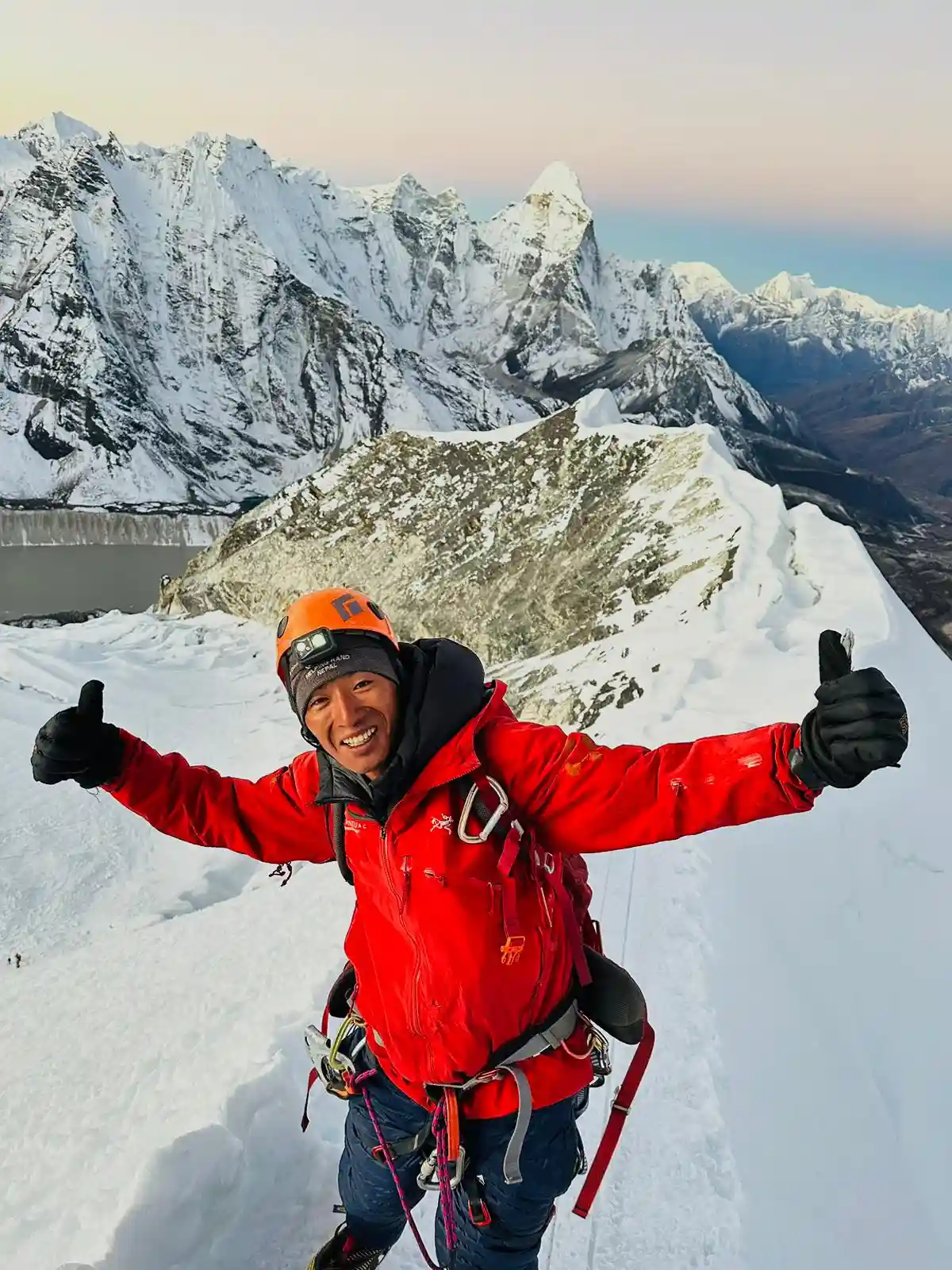
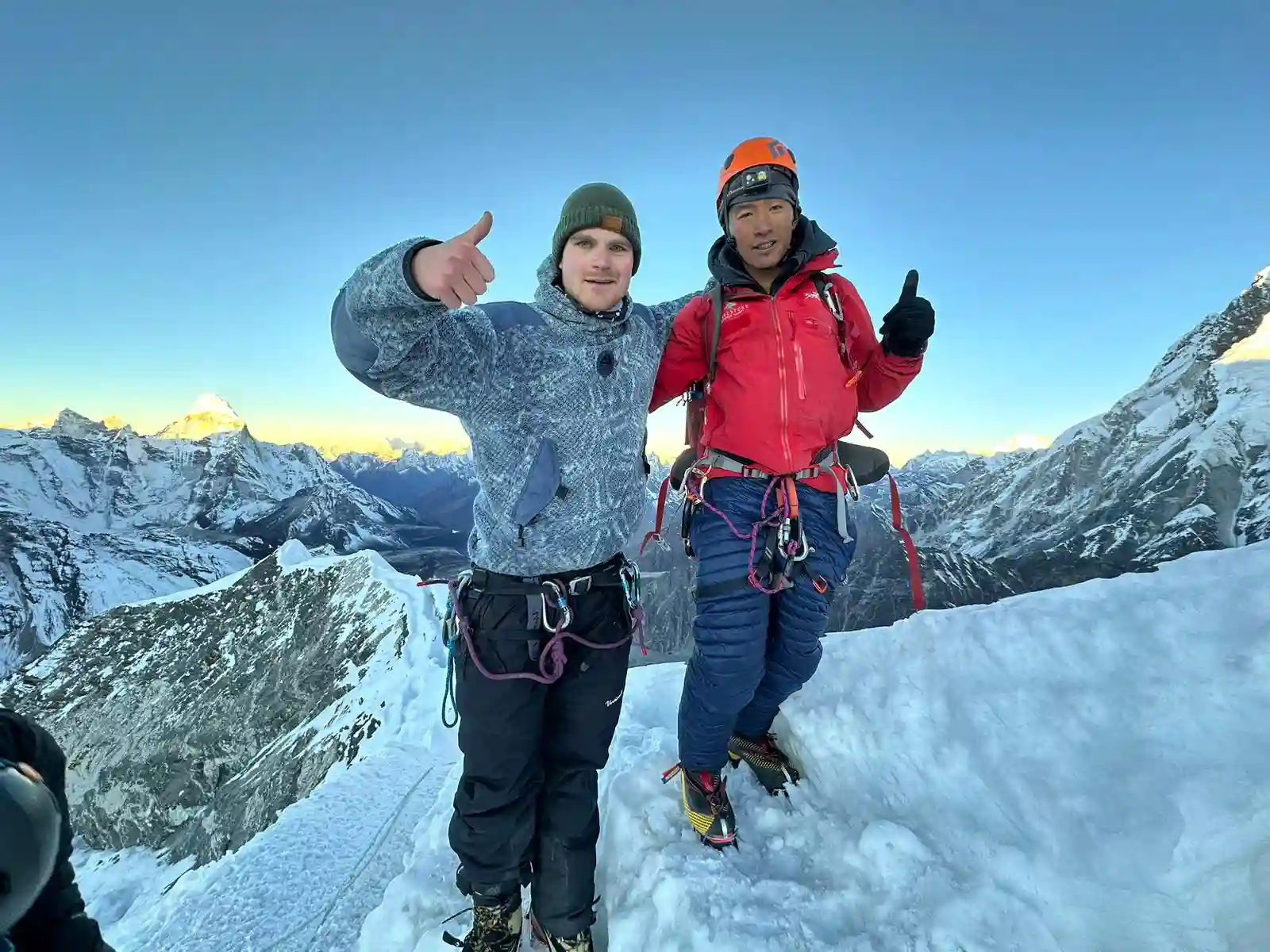
  • Summit Island Peak at 6,189 meters and enjoy panoramic views of the Himalayan peaks.
  • Experience snow and ice climbing using equipment such as crampons, harnesses, ropes, and ice axes.
  • Experience the unique Sherpa culture, Buddhist prayer wheels, mani walls, monasteries, and mountain settlements.

Overview

Island Peak Climbing with Everest Base Camp Trek is a thrilling Himalayan adventure that combines the challenge of climbing a 6,189 meters peak with the experience of reaching Everest Base Camp. Also known as Imja Tse, Island Peak is one of Nepal’s popular climbing peaks and is a great choice for trekkers looking to experience high-altitude mountaineering. The climb offers an exciting mix of steep sections, snow, ice, and basic technical climbing, making it a rewarding challenge for adventure seekers. Along with the Island Peak summit, the journey includes visits to Everest Base Camp at 5,364 meters and Kala Patthar at around 5,550 meters, both offering impressive views of Mount Everest and the surrounding Himalayan peaks. Beyond climbing, the experience allows you to enjoy the natural beauty of the Everest region, explore traditional Sherpa communities, visit Buddhist monasteries, and experience the local culture and way of life. With proper preparation and professional climbing support, this adventure offers a memorable introduction to Himalayan peak climbing.

Itinerary

Day 1: Arrival in Kathmandu

Welcome to Nepal, upon your arrival at Tribhuvan International Airport in Kathmandu, our representative will welcome you and assist you with the airport formalities. After collecting your baggage, you will be transferred to your hotel by private vehicle. The drive to the city center usually takes around 20 to 30 minutes, depending on traffic. After checking into the hotel, you can rest and refresh yourself after your journey. Later, you will attend a trip briefing with your guide and meet other members of the group. Your guide will explain important details about the trek and Island Peak climb, including the itinerary, walking hours, accommodation, meals, safety, and altitude. If you arrive early, you can explore the nearby areas of Kathmandu or Thamel. In the evening, enjoy a welcome dinner before returning to the hotel for a comfortable rest.

  • Max Elevation: 1400 meters (Kathmandu)
  • Travel Distance: 6 to 8 kilometers
  • Travel Hours: 20 to 30 minutes
  • Accommodation: 3 Star Hotel
  • Meal: Dinner
Day 2: Preparation of Trek and Climbing

The day begins with a briefing from your climbing guide, covering important safety procedures, weather conditions, the climbing plan, and the equipment required for the journey. A complete gear check will also be done to make sure all essential trekking and climbing equipment is ready, including suitable boots for high-altitude conditions. You will also have some free time to explore Kathmandu and visit its historic and cultural attractions. If included in your package, you can visit UNESCO World Heritage Sites such as Swayambhunath, also known as the Monkey Temple, and Kathmandu Durbar Square. This day also provides some flexibility in case of flight delays or if you need to arrange any last-minute equipment. After completing the preparation and sightseeing, return to your hotel and rest before beginning your journey into the Everest region. In the afternoon, head back to your hotel and spend the comfortable night before the next day's journey.

  • Max Elevation: 1,400 meters (Kathmandu)
  • Travel Distance: 15 to 20 kilometers
  • Travel Hours: 6 to 7 hours
  • Accommodation: 3 Star Hotel
  • Meal: Breakfast, Lunch and Dinner
Day 3: Fly to Lukla from Kathmandu or from Ramechhap and Trek to Phakding

Your Island Peak climbing adventure officially begins today with an early morning scenic flight to Lukla, the gateway to the Everest region. The flight offers beautiful views of the hills, valleys, and Himalayan mountains. During the busy trekking seasons, flights may operate from Ramechhap (Manthali) Airport instead of Kathmandu. In this case, you will drive to Manthali early in the morning to catch your flight to Lukla. After landing at Lukla, you will meet the trekking staff and porters and prepare for the first day on the trail. The trek to Phakding follows a relatively easy path through small mountain settlements, green hills, and sections of the Dudh Koshi Valley. The trail gradually descends from Lukla and crosses the Tharo Koshi River before continuing toward Phakding. After around 3 to 4 hours of walking, you will reach Phakding and check into your tea house or lodge. You can rest and enjoy your first evening in the Everest region.

  • Max Elevation: 2,610 meters (Phakding)
  • Travel Distance: 7 to 8 kilometers
  • Travel Hours: 3 to 4 hours
  • Accommodation: Tea house /Lodge
  • Meal: Breakfast, Lunch and Dinner
Day 4: Trek to Namche Bazaar from Phakding

After breakfast, you will continue your trek from Phakding toward Namche Bazaar, following the Dudh Koshi River through the beautiful landscapes of the Everest region. The trail crosses several suspension bridges, including the famous Hillary Suspension Bridge, before entering Sagarmatha National Park. As you continue through pine, juniper, and rhododendron forests, you may spot some of the region's native birds and wildlife. The trail gradually becomes steeper as you approach Namche Bazaar, with several uphill sections along the way. If the weather is clear, you may get your first views of Mount Everest and other surrounding peaks during the trek. After around 5 to 6 hours of walking, you will reach Namche Bazaar, the main Sherpa town and an important trading center in the Everest region. If your trek falls on a Saturday, you can also explore the local weekly market, where traders and residents gather to buy and sell various local goods. You will then check into your tea house and rest for the evening with warmly served meals.

  • Max Elevation: 3,440 meters (Namche Bazaar)
  • Travel Distance: 10 to 12 kilometers
  • Travel Hours: 5 to 6 hours
  • Accommodation: Tea house /Lodge
  • Meal: Breakfast, Lunch and Dinner
Day 5: Accommodation Day and Rest Day in Namche Bazaar

This is an important acclimatization and rest day in Namche Bazaar. The purpose of this day is to give your body time to adjust to the increasing altitude before heading toward the higher parts of the Everest region. Instead of staying idle, you take a short hike to a higher elevation and return to Namche to sleep. Depending on your pace and weather conditions, you may visit the Sagarmatha National Park headquarters, Everest Photo Gallery, or hike toward the Everest View Hotel. You can enjoy views of Mount Everest, Ama Dablam, Lhotse, Nuptse, Thamserku, Kusum Khangkaru,Tabuche Peak, and other surrounding peaks from the higher viewpoints. You can also explore the lively streets of Namche Bazaar, interact with the local Sherpa community, and learn more about their culture and way of life. If your visit falls on Saturday, you can also explore the popular Saturday market in Namche Bazaar. After the hike and exploration, return to the tea house for a relaxed evening and another night in Namche Bazaar.

  • Max Elevation: 3,880 meters (Acclimatization Hike)
  • Travel Distance: 4 to 5 kilometers
  • Travel Hours: 3 to 4 hours
  • Accommodation: Tea house /Lodge
  • Meal: Breakfast, Lunch and Dinner
Day 6: Trek to Tengboche from Namche Bazaar

After breakfast, you leave Namche Bazaar and continue toward Tengboche. The trail starts with a gradual climb before reaching a more open section along the mountainside, where you can enjoy views of Mount Everest, Nuptse, Lhotse, Ama Dablam, Tabuche, and Thamserku. The trail passes through small settlements and follows a series of gentle ups and downs. From Sansa, the path gradually descends through pine, rhododendron, and juniper forests toward Phunki Tenga. Here, you will cross the Dudh Koshi River over a suspension bridge before beginning the uphill climb toward Tengboche. The final section takes around two hours and leads you to Tengboche, a peaceful Sherpa village surrounded by impressive Himalayan scenery. You can visit the famous Tengboche Monastery, one of the most important Buddhist monasteries in the Khumbu region, and you can also attend the ceremony at 3pm, and observe its traditional architecture and peaceful surroundings. After exploring the monastery, you will return to the tea house, enjoy dinner, and rest for the night.

  • Max Elevation: 3,860 meters (Tengboche)
  • Travel Distance: 9 to 10 kilometers
  • Travel Hours: 5 to 6 hours
  • Accommodation: Tea house /Lodge
  • Meal: Breakfast, Lunch and Dinner
Day 7: Trek to Dingboche from Tengboche

You leave Tengboche and continue toward Dingboche, after having breakfast. The trail first descends through beautiful forests before crossing suspension bridges and passing through traditional Sherpa settlements. You then reach Pangboche, one of the largest and oldest Sherpa villages in the region. From Pangboche, the trail gradually climbs higher as the landscape changes. The dense forests become less common, and the surroundings become more open, rocky, and dry. You will continue along the Imja Valley with views of Lhotse, Ama Dablam, Island Peak, and other Himalayan peaks. As you gain altitude, the air becomes thinner and the walking may feel more demanding. After around 5 to 6 hours of trekking, you reach Dingboche at 4,410 meters. Once there, check into your tea house, rest, and stay well hydrated to help your body adjust to the higher elevation. Dingboche is an important stop before heading toward Everest Base Camp and Island Peak, so a comfortable evening and proper rest are essential.

  • Max Elevation: 4,410 meters (Dingboche)
  • Travel Distance: 10 to 11 kilometers
  • Travel Hours: 5 to 6 hours
  • Accommodation: Tea house /Lodge
  • Meal: Breakfast, Lunch and Dinner
Day 8: Acclimatization Day and Rest Day in Dingboche

You can spend this resting, as it is an important acclimatization day in Dingboche. At an altitude of around 4,410 meters, your body needs time to adjust to the thinner air before you continue toward the higher parts of the Everest region. Proper acclimatization helps reduce the risk of altitude-related problems such as headaches, nausea, tiredness, and shortness of breath. You can also take a short hike to a higher viewpoint around Dingboche and then return to the village to sleep at the same altitude. Depending on weather and your fitness level, the hike may reach around 4,900 meters. The rest of the day is for relaxing, staying hydrated, and preparing for the upcoming trekking and climbing days. You can also enjoy the mountain views of Ama Dablam, Island Peak, Lhotse, and other surrounding peaks before returning to your tea house for the night.

  • Max Elevation: 4,900 meters (Acclimatization Hike)
  • Travel Distance: 4 to 6 kilometers
  • Travel Hours: 3 to 4 hours
  • Accommodation: Tea house /Lodge
  • Meal: Breakfast, Lunch and Dinner
Day 9: Trek to Lobuche from Dingboche

Your journey now will head towards Lobuche by leaving Dingboche behind after having breakfast. The trail gradually climbs through the open and rugged landscape of the Khumbu region, with impressive views of Ama Dablam, Cholatse, Tabuche, Lobuche East, and other surrounding peaks. As you move higher, the vegetation becomes sparse and the terrain becomes more rocky. The trail continues toward Duglha and then climbs along the terminal moraine of the Khumbu Glacier, and here we will cross a river before reaching Thukla. You will reach Thukla Pass, where you can see memorials dedicated to climbers and mountaineers who lost their lives in the Himalayas. The area offers a quiet moment to reflect on the challenges of high-altitude climbing. From Thukla, the trail continues toward Lobuche with a steady uphill walk. After around 5 to 6 hours of trekking, you will reach Lobuche at 4,940 meters and you can get the closer view of Nuptse as well from Loche in the evening with a sunset view, if the weather is clear. Check into your tea house, enjoy your meal, and rest well as you prepare for the journey toward Everest Base Camp.

  • Max Elevation: 4,940 meters (Lobuche)
  • Travel Distance: 11 to 12 kilometers
  • Travel Hours: 5 to 6 hours
  • Accommodation: Tea house /Lodge
  • Meal: Breakfast, Lunch and Dinner
Day 10: Trek to Gorakshep and Hike to Everest Base Camp

Today is one of the main highlights of your trek as you head toward Everest Base Camp. After an early breakfast, you will leave Lobuche and follow the rugged trail toward Gorakshep. The route continues along the Khumbu Glacier and its surrounding moraine, with impressive views of the high Himalayan peaks. After reaching Gorakshep at around 5,164 meters, you will have lunch and leave your heavier belongings at the tea house. You will then continue with a hike to Everest Base Camp, which takes 2 hours to ascend and 2 hours to descend and get back to Gorakshep. The trail is rocky and uneven, but the experience of reaching the base camp makes the effort worthwhile. At Everest Base Camp, you will have time to enjoy the surroundings, take photographs, and appreciate the views of the Khumbu Glacier and nearby mountains. After spending some time at the base camp, you will retrace the trail back to Gorakshep for an overnight stay. This is a demanding day at high altitude, so maintaining a steady pace, staying hydrated, and following your guide's instructions are important.

  • Max Elevation: 5,364 meters (Everest Base Camp)
  • Travel Distance: 15 to 16 kilometers
  • Travel Hours: 7 to 8 hours
  • Accommodation: Tea house /Lodge
  • Meal: Breakfast, Lunch and Dinner
Day 11: Early Morning Hike to Kalapatther and Back to Chhukung

Your journey begins early with a hike to Kala Patthar before sunrise. The trail from Gorakshep is rocky and steep in places, but reaching the viewpoint at dawn offers a rewarding experience, which takes you around 2 hours to ascend and and 2 hours to descend to get back to Gorakshep. From Kala Patthar, you can enjoy a wide panoramic view of Mount Everest, Nuptse, Lhotse, Pumori, Ama Dablam, and other surrounding peaks as the first sunlight reaches the mountains. After spending some time at the viewpoint, you will descend back to Gorakshep for breakfast and a short rest. You will then retrace part of the trail toward Lobuche before taking the route toward the Imja Valley. The landscape gradually changes as you move away from the main Everest Base Camp trail. The trail continues through the rugged mountain terrain toward Dingboche and then Chhukung. After a long day of walking, you will reach Chhukung, where you will check into your tea house, have dinner, and rest before beginning the Island Peak climbing section.

  • Max Elevation: 5,550 meters (Kala Patthar)
  • Travel Distance: 17 to 19 kilometers
  • Travel Hours: 8 to 10 hours
  • Accommodation: Tea house /Lodge
  • Meal: Breakfast, Lunch and Dinner
Day 12: Trek to Island Peak Base Camp

After breakfast, you will leave Chhukung and begin the trek toward Island Peak Base Camp. The trail follows the Imja Valley, where you can also get to see the Imja Tsho Lake, and gradually climbs through rugged mountain terrain. Along the way, you can enjoy views of glaciers, glacial streams, waterfalls, and the surrounding Himalayan peaks. As you gain altitude, the landscape becomes more rocky and barren. You will cross the 5,000-meter mark and continue toward the base camp at around 5,200 meters. The walk is not very long, but the increasing altitude makes it important to maintain a slow and steady pace. After reaching Island Peak Base Camp, you will settle into the tented camp and have time to rest. Your climbing guide will also provide a basic briefing and conduct climbing practice, including how to use equipment such as crampons, harnesses, ropes, and an ice axe. After dinner, get an early night's rest in preparation for the summit attempt.

  • Max Elevation: 5,200 meters (Island Peak Base Camp)
  • Travel Distance: 5 to 6 kilometers
  • Travel Hours: 4 to 5 hours
  • Accommodation: Tented Camp
  • Meal: Breakfast, Lunch and Dinner
Day 13: Summit Island Peak Then Back to Chhukung

This is the main climbing day and the biggest challenge of the journey. You will begin the summit attempt very early, usually around 1:00 AM, so you can reach the summit before the weather becomes windy later in the day. After a light meal and final equipment check, you will start climbing under the guidance of your climbing team. The route begins with steep and rocky sections before reaching more technical terrain. As you climb higher, you may encounter snow, ice, crevasses, and fixed ropes. Your climbing guide will assist you throughout the difficult sections and help you use equipment such as crampons, harnesses, and ascenders safely. After several hours of climbing, you will reach the summit of Island Peak at 6,189 meters. From the top, you can enjoy impressive views of Lhotse, Lhotse Shar, Makalu, Ama Dablam, Baruntse, and other Himalayan peaks. After celebrating your achievement and taking photographs, you will carefully descend toward Island Peak Base Camp. Depending on your pace, weather, and trail conditions, you will continue to Chhukung for the night. After this long and demanding day, enjoy a well-earned rest.

  • Max Elevation: 6,189 meters (Island Peak Summit)
  • Travel Distance: 8 to 10 kilometers
  • Travel Hours: 10 to 12 hours
  • Accommodation: Tea house /Lodge
  • Meal: Breakfast, Lunch and Dinner
Day 14: Trek to Tyangboche from Chhukung

As you begin your journey ahead, you leave Chhukung and begin your descent toward Tyangboche. After the demanding Island Peak summit, today's trek is more relaxed as you move to a lower altitude. The trail follows the Imja Valley and passes through scenic mountain landscapes with views of Ama Dablam, Lhotse, and other surrounding peaks. You will pass through Pangboche and continue along the trail through sections of forest and traditional Sherpa settlements. As you lose altitude, the landscape becomes greener and the air feels more comfortable. After around 5 to 6 hours of walking, you will reach Tyangboche. You can spend some time relaxing or revisit the famous Tengboche Monastery if you did not have enough time during the earlier part of the trek. Enjoy dinner at the tea house and rest well after the Island Peak climb.

  • Max Elevation: 3,860 meters (Tengboche)
  • Travel Distance: 10 to 12 kilometers
  • Travel Hours: 5 to 6 hours
  • Accommodation: Tea house /Lodge
  • Meal: Breakfast, Lunch and Dinner
Day 15: Trek to Namche Bazaar from Tyangboche

After breakfast, you will leave Tengboche and continue your descent toward Namche Bazaar. The trail passes through beautiful forests of pine, rhododendron, and juniper, with occasional views of Ama Dablam, Everest, Nuptse, and other surrounding peaks. You will cross the Dudh Koshi River near Phunki Tenga and follow the familiar trail through small Sherpa settlements. The route includes a mix of gradual climbs and descents before reaching the higher section toward Namche. After around 5 to 6 hours of trekking, you will arrive at Namche Bazaar. Take some time to relax, enjoy the lively atmosphere of the town, and recover after the Island Peak climbing section. You spend overnight at a tea house in Namche Bazaar with warm meals.

  • Max Elevation: 3,440 meters (Namche Bazaar)
  • Travel Distance: 9 to 10 kilometers
  • Travel Hours: 5 to 6 hours
  • Accommodation: Tea house /Lodge
  • Meal: Breakfast, Lunch and Dinner
Day 16: Trek to Lukla from Namche Bazaar

You will then begin the final trekking day of your Island Peak and Everest Base Camp adventure, after having breakfast. The trail follows the Dudh Koshi Valley as you descend from Namche Bazaar toward Lukla. You will pass through familiar Sherpa villages, forests, suspension bridges, and rivers along the way. The route includes several uphill and downhill sections, but the lower altitude makes the walk more comfortable compared to the higher parts of the trek. You will pass through Phakding and continue toward Lukla, where the trekking section of your journey comes to an end. After reaching Lukla, check into your tea house and take some time to relax. In the evening, you can enjoy a final dinner with your trekking and climbing team and celebrate the successful completion of your Island Peak adventure.

  • Max Elevation: 2,860 meters (Lukla)
  • Travel Distance: 17 to 19 kilometers
  • Travel Hours: 6 to 7 hours
  • Accommodation: Tea house /Lodge
  • Meal: Breakfast, Lunch and Dinner
Day 17: Fly Back to Kathmandu from Lukla

From Lukla, you will take a scenic flight back to Kathmandu after breakfast, marking the end of your trekking and climbing journey in the Everest region. The flight offers one more opportunity to enjoy aerial views of the Himalayan mountains, green hills, and deep valleys before returning to the city. Upon landing in Kathmandu, our representative will transfer you to your hotel. You can spend the rest of the day resting after the long adventure or explore the nearby streets and cultural areas if you feel comfortable. In the evening, enjoy a special farewell or celebration dinner with the team to mark the successful completion of your Island Peak Climbing with Everest Base Camp Trek. After a long day you can now spend a comfortable overnight at a 3-star hotel in Kathmandu.

  • Max Elevation: 1,400 meters (Kathmandu)
  • Travel Distance: 135 to 140 kilometers by air
  • Travel Hours: 30 to 40 minutes
  • Accommodation:  3 Star Hotel
  • Meal: Breakfast, Lunch and Dinner
Day 18: Final Departure

This day marks the end of your Island Peak Climbing with Everest Base Camp Trek. After breakfast, our airport representative will pick you up from your hotel and transfer you to Tribhuvan International Airport in a private vehicle according to your flight schedule. You will have enough time to complete the check-in and airport formalities before your international flight. Take this final moment to look back on your memorable Himalayan adventure and the experiences you gained during the trek and Island Peak climb. We wish you a safe and comfortable journey back home and hope to welcome you again for another adventure in Nepal.

  • Max Elevation: 1,400 meters (Kathmandu)
  • Travel Distance: 6 to 8 kilometers
  • Travel Hours: 20 to 30 minutes
  • Meal: Breakfast

Lukla flight

Most trekkers reach the Everest region via a short, scenic flight to Tenzing-Hillary Airport (LUA) in Lukla. During the peak trekking seasons (March–May and October–November), flights are often rerouted to depart from Manthali Airport in Ramechhap instead of Kathmandu to reduce air traffic congestion.Most trekkers reach the Everest region via a short, scenic flight to Tenzing-Hillary Airport (LUA) in Lukla. During the peak trekking seasons (March–May and October–November), flights are often rerouted to depart from Manthali Airport in Ramechhap instead of Kathmandu to reduce air traffic congestion.

Most trekkers reach the Everest region via a short, scenic flight to Tenzing-Hillary Airport (LUA) in Lukla. During the peak trekking seasons (March–May and October–November), flights are often rerouted to depart from Manthali Airport in Ramechhap instead of Kathmandu to reduce air traffic congestion.Most trekkers reach the Everest region via a short, scenic flight to Tenzing-Hillary Airport (LUA) in Lukla. During the peak trekking seasons (March–May and October–November), flights are often rerouted to depart from Manthali Airport in Ramechhap instead of Kathmandu to reduce air traffic congestion.

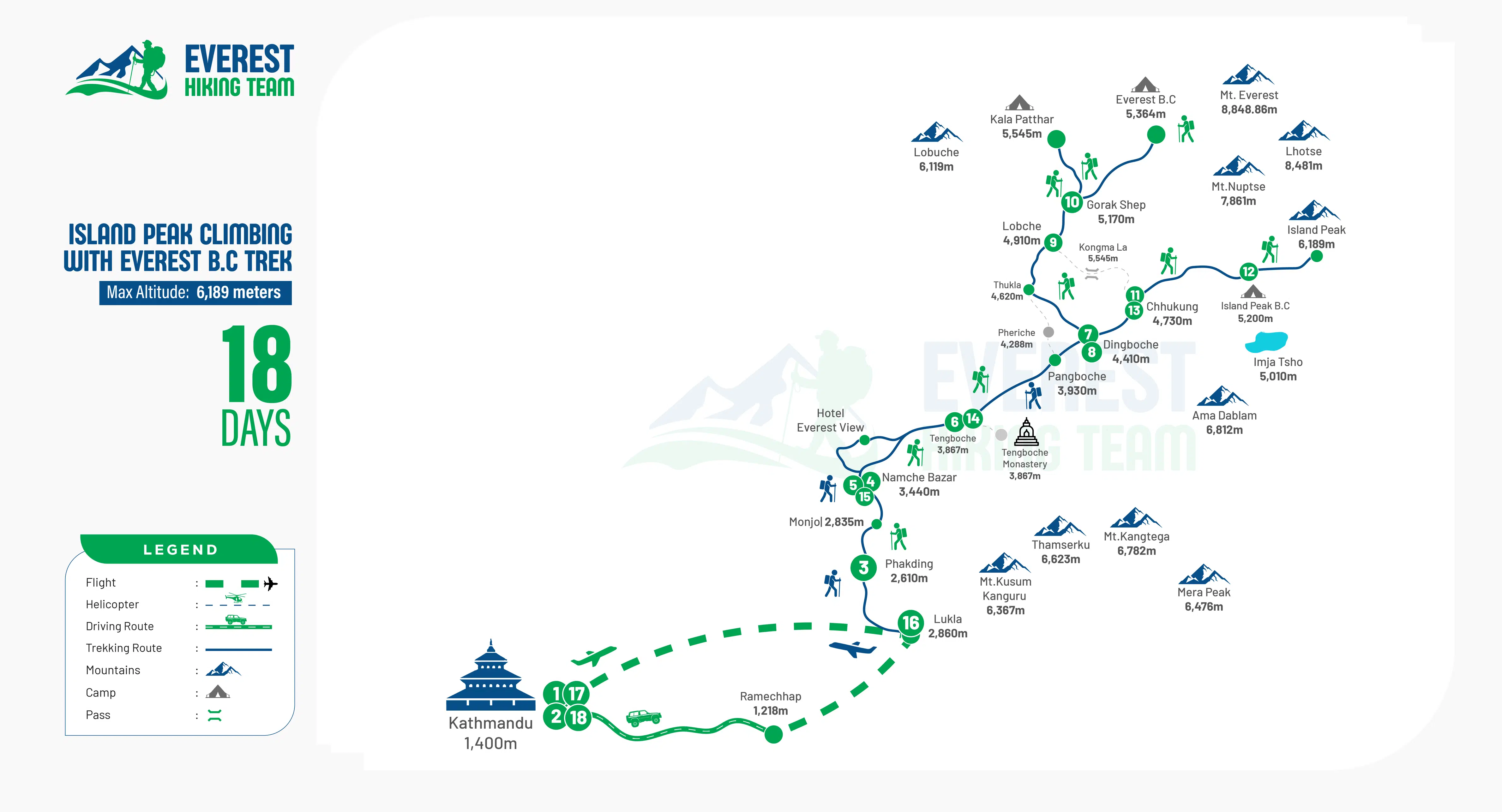
Trek Route

Island Peak Climbing with Everest Base Camp Trek-18 Days roue image

What's included

  • Airport pickup and Drop-off transfer to your Kathmandu hotel by private vehicle according to your arrival time.
  • 3 nights accommodation in Kathmandu.
  • Pre-trip meeting and briefing at the company office one day before departure.
  • welcome Dinner. 
  • Island Peak Climbing Permit, Sagarmatha National Park Permit, Khumbu Pasang Lhamu Rural Municipality Permit, government taxes, VAT, and applicable service charges
  • Flights between Kathmandu-Lukla-Kathmandu or Ramchhap-Lukla-Kathmandu During the peak seasom including airport transfers.
  • All meal Breakfasts, Lunch, and Dinner with 3 cup of tea/coffee per day during the trek and climbing period.
  • Accommodation in tea houses/lodges and tented camp as mentioned in the itinerary
  • Licensed, English-speaking, and first-aid-trained trekking and climbing guide.
  • One porter for two trekkers (weight Limit=10-12 kg per person.
  • Quality tents and necessary kitchen and camping equipment
  • Group climbing equipment such as climbing ropes, ice screws, snow bars, snow shovels, and other required technical equipment
  • A comprehensive first-aid kit carried by the guide throughout the trek
  • Pulse oximeter, supplemental oxygen canister, staff insurance, and assistance with emergency rescue arrangements when required
  • Free storage of extra luggage at the company store during the trek
  • Flight from Lukla to Ramechhap or Kathmandu, including airport transfers
  • Airport transfer by private vehicle for your final departure.
  • Island Peak Climbing with Everest Base Camp Trek Map.

What's excluded

  • International flights to and from Nepal
  • Nepal visa fees and related expenses
  • Additional hotel nights or meals in Kathmandu due to early arrival, delayed departure, early return, or changes to the itinerary
  • Personal travel and medical insurance covering high-altitude trekking, peak climbing, medical treatment, and emergency evacuation
  • Porter services are available at an additional cost
  • Hot showers, Wi-Fi, charging facilities, extra meals, accommodation upgrades, laundry, and other personal expenses
  • Alcoholic beverages, soft drinks, bottled water, and other drinks not included in the package
  • Personal clothing, trekking gear, climbing equipment, toiletries, and personal medical supplies
  • Additional charges for luggage exceeding the permitted baggage limit
  • Portable altitude chamber services or additional oxygen arrangements if required
  • Individual climbing equipment that is not included in the group equipment
  • A private climbing guide can be arranged at an additional cost
  • Fees for drone use, filming, photography, or other special permits
  • Helicopter rescue, medical evacuation, hospital treatment, and other emergency expenses are not included
  • Tips for guides, porters, climbing staff, and other support staff are not mandatory but are appreciated
  • Any service, activity, or expense not specifically mentioned under the Cost Includes section

Packaging List

Packing properly is important for a safe and comfortable Island Peak Climbing with Everest Base Camp Trek. The trek takes you from the lower hills to more than 6,000 meters, where temperatures can be very cold and weather can change quickly. You need a mix of lightweight trekking clothes, warm layers, personal items, and technical climbing gear. Pack only the essentials and make sure all climbing equipment fits properly before starting the trek.

General

  • 40–50 liter trekking backpack
  • 70–80 liter duffel bag
  • Small daypack
  • Waterproof backpack rain cover
  • Duffel bag rain cover
  • Sleeping bag suitable for temperatures around -20°C
  • Sleeping bag liner
  • Trekking poles
  • Headlamp with extra batteries
  • Water bottles or hydration bladder
  • 1-liter reusable water bottle
  • Water purification tablets or water filter
  • Trekking map
  • Travel documents and passport copies
  • Passport-size photographs
  • Travel insurance documents
  • Money and wallet
  • Small padlocks
  • Zip-lock and waterproof bags
  • Dry bags for important belongings
  • Quick-dry towel
  • Water bottle cleaning brush
  • Power bank
  • Universal travel adapter
  • Mobile phone
  • Camera and extra batteries
  • Watch
  • Sunglasses case
  • Small repair kit
  • Lightweight sewing kit
  • Multi-purpose tape
  • Small garbage bags

Clothing

  • Moisture-wicking trekking T-shirts
  • Long-sleeve trekking shirts
  • Thermal base-layer sets
  • 2 pairs of trekking trousers
  • Fleece jacket
  • Warm down jacket
  • Waterproof and windproof jacket
  • 1 pair of waterproof trousers
  • 1 pair of insulated climbing trousers
  • 4–5 pairs of trekking socks
  • 2 pairs of warm thermal socks
  • 4–5 pairs of underwear
  • Comfortable sleepwear
  • Hat or beanie
  • Sun hat or cap
  • Neck warmer or buff

Head and Face

  • Sun hat or trekking cap
  • Warm woolen or fleece hat
  • Balaclava
  • Neck warmer or buff
  • UV-protection sunglasses
  • Glacier sunglasses for the climbing section
  • Ski or mountaineering goggles
  • Sunscreen SPF 40–50+
  • SPF lip balm
  • Face mask or buff for dusty sections

Footwear

  • Waterproof trekking boots with good ankle support
  • Mountaineering boots suitable for Island Peak
  • Trekking shoes or lightweight camp shoes
  • Sandals or slippers for tea houses
  • Woolen trekking socks
  • Thermal socks
  • Extra pairs of comfortable socks
  • Liner socks
  • Gaiters
  • Crampon-compatible boots for the Island Peak summit
  • Spare shoelaces

Handwear

  • Lightweight trekking gloves
  • Fleece gloves
  • Warm insulated gloves
  • Waterproof outer gloves
  • Inner glove liners
  • Hand warmers

Climbing Equipment

  • Mountaineering boots
  • Crampons
  • Climbing harness
  • Climbing helmet
  • Ice axe
  • Ascender/Jumar
  • Descender
  • Locking carabiners
  • Non-locking carabiners
  • Prusik loop
  • Climbing sling
  • Climbing gloves
  • Mountaineering goggles
  • Gaiters
  • Climbing rope

Personal Items

  • Passport
  • Copies of passport
  • Passport-size photographs
  • Travel insurance documents
  • Emergency contact information
  • Cash in Nepalese rupees
  • Mobile phone
  • Charger
  • Power bank
  • Camera
  • Spare batteries
  • Universal adapter
  • Personal toiletries
  • Toothbrush and toothpaste
  • Small soap
  • Shampoo
  • Moisturizer
  • Lip balm
  • Wet wipes
  • Tissue paper
  • Hand sanitizer
  • Small quick-dry towel
  • Deodorant
  • Toilet paper
  • Feminine hygiene products
  • Personal medications
  • Prescription medicines
  • Basic personal first-aid supplies
  • Blister treatment
  • Personal hygiene items

Medical and First Aid

  • Personal medication
  • Prescription medicines
  • Basic pain relief medicine
  • Blister plasters
  • Adhesive bandages
  • Antiseptic wipes
  • Elastic bandage
  • Small medical tape
  • Oral rehydration salts
  • Electrolyte powder

Sun and Skin Protection

  • High-SPF sunscreen
  • SPF lip balm
  • UV-protection sunglasses
  • Glacier glasses
  • Moisturizer
  • Face cream
  • Lightweight face covering

Optional Items

  • Binoculars
  • Book or e-reader
  • Journal and pen
  • Small snacks or energy bars
  • Lightweight thermos
  • Foldable cup
  • Playing cards
  • Small personal entertainment items
  • Trekking towel
  • Portable water filter

Frequently Asked Questions

Is Island Peak Climbing with Everest Base Camp Trek difficult?

Yes, this is a challenging trek and climbing trip. You will walk at high altitudes and climb Island Peak at 6,189 meters. The summit involves steep and snowy sections, so good fitness, proper acclimatization, and basic climbing preparation are important for a safe and enjoyable experience.

Do I need previous climbing experience for Island Peak?

Previous climbing experience is helpful but not always required. However, you should be comfortable with long trekking days and high-altitude conditions. Your climbing guide will teach you how to use basic equipment such as crampons, harnesses, ropes, and an ice axe before the summit attempt.

What is the highest altitude reached during the trek?

The highest point of the trip is the summit of Island Peak at 6,189 meters. You will also reach Everest Base Camp at 5,364 meters and Kala Patthar at around 5,550 meters. Proper acclimatization days in Namche and Dingboche help your body adjust to the altitude.

What is the best time for Island Peak Climbing?

The best seasons for Island Peak Climbing are spring and autumn. March, April, and May usually offer good climbing conditions, while September, October, and November often bring clear skies and stable weather. October and November are especially popular for both Everest Base Camp trekking and peak climbing.

What permits are required for Island Peak Climbing?

You need several permits for this trip, including the Sagarmatha National Park permit and the local area permit for the Everest region. A separate Island Peak climbing permit is also required. The exact permit fees can change, so the current requirements should be confirmed before the trip.

What equipment do I need for Island Peak?

You need proper trekking and climbing equipment for Island Peak. Essential items include mountaineering boots, crampons, climbing harness, helmet, ice axe, warm gloves, goggles, and suitable winter clothing. Some climbing equipment may be provided by the trekking company, while personal items need to be arranged by you.

Is travel insurance necessary for this trek?

Yes, comprehensive travel insurance is strongly recommended for Island Peak Climbing. Your insurance should cover high-altitude trekking, peak climbing, medical treatment, and emergency helicopter evacuation. Before purchasing a policy, check that it covers the maximum altitude of 6,189 meters and the activities included in your itinerary.

User Review