Lobuche East Peak Climbing with Everest Base Camp Trek-17 days

Tour Info

Trip code

E-032

Starting Point/ End Point

Kathmandu

Accommodations

Lodge/ Tea House

Max Altitude

6119m

Duration

17 days

country

Trip grade

Challenging

Best Season

Spring (March–May) and Autumn (September–November)

Highlights

  • Scenic flight between Kathmandu and Lukla with incredible Himalayan views.
  • Pass through stunning Sherpa villages, woods and suspension bridges.
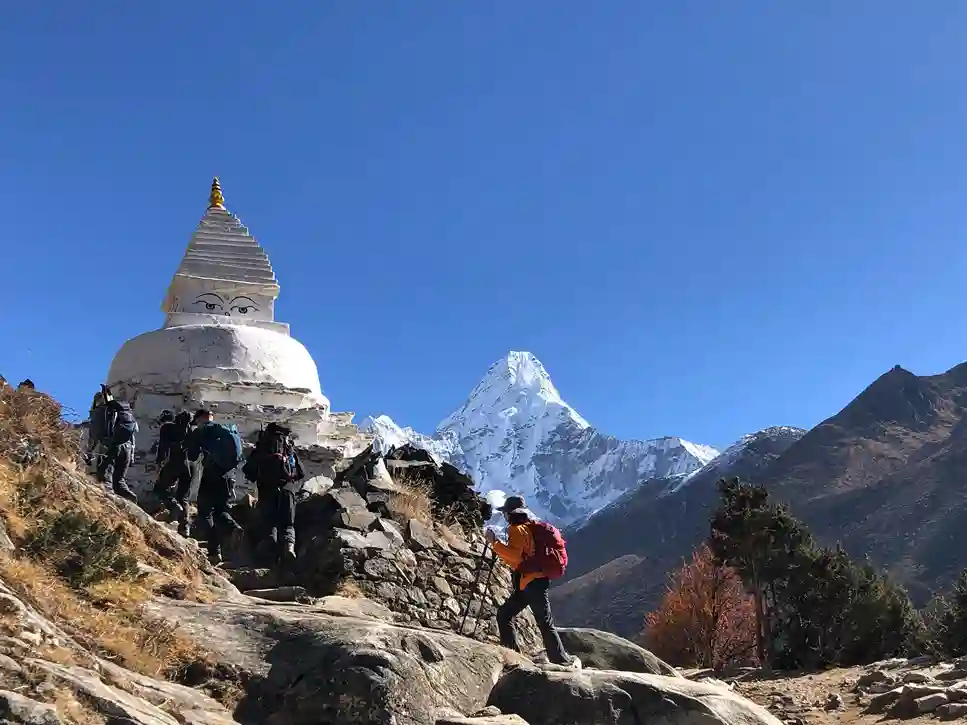
  • Explore one of the most popular monasteries, Tengboche Monastery, located in the centre of the Khumbu area.
  • Enjoy a stunning sunrise right above Mt Everest from Kala Patthar.
  • Climb Sumit Lobuche East Peak 6119m with expert climbing assistance.
  • Learn and use basic mountaineering equipment during the climbing section.
  • Follow the trail of the Khumbu Glacier and see the scenery for yourself.
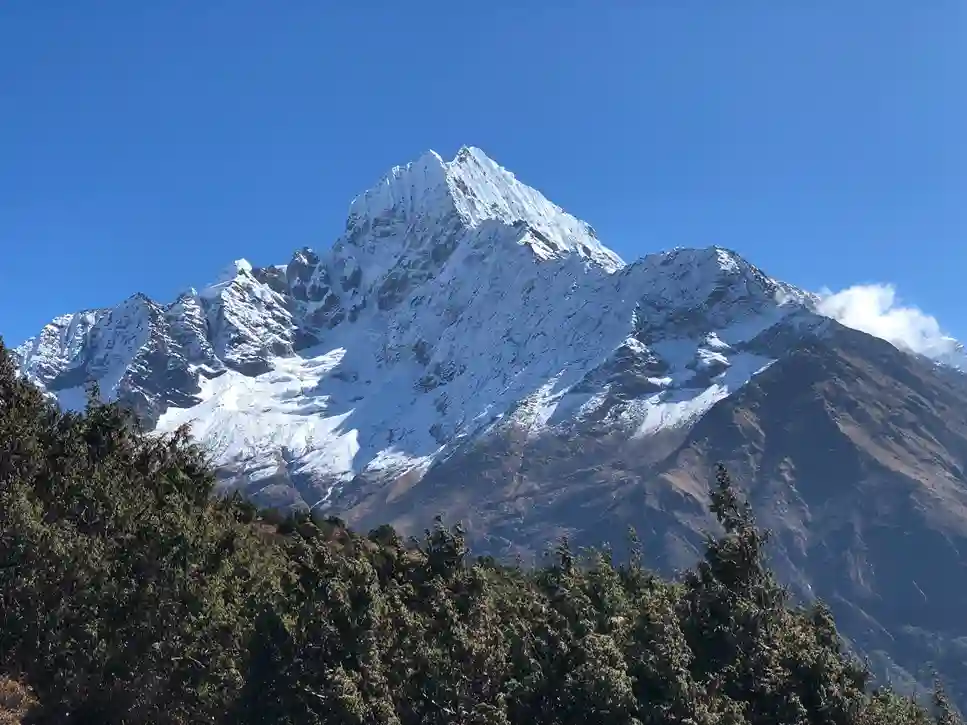
  • See the majestic mountain views of Everest, Lhotse, Makalu, Nuptse, Ama Dablam, Pumori and much more.
  • Stay in authentic mountain tea houses and climb from a high altitude camp.
  • Discover the culture and tradition of the hospitable Sherpa community.
  • Do two treks in one trip the Everest Base Camp Trek and a 6,000-meter summit.

Overview

Lobuche East Peak Climbing with Everest Base Camp Trek, is an exciting adventure in the popular Everest Region of eastern Nepal. The Lobuche Peak is one of the major peaks of the Khumbu region, and is located near Lobuche Village. It has two prominent peaks, the Lobuche East summit (6,119 meters) and the Lobuche West summit (6,145 meters). Lobuche Peak is part of the Everest mountain range and it is also a popular climbing destination in Nepal; especially in the Everest Region. The lower parts of the region also have lush green hills, while the higher areas offer clear views of the Himalayan mountains. For those who wish to experience more adventure on the regular Everest Base Camp Trekking, the 18 day Lobuche Peak Climbing with EBC Trek is a great choice! The journey offers a mix of adventure and physical challenge and can provide useful experience; before taking part in longer expeditions or more advanced mountaineering activities. During the trip, you can experience the natural beauty of the Everest Region; along with Sherpa hospitality, beautiful landscapes, traditional monasteries, shrines, glaciers, and snow-covered mountains throughout the area.

Itinerary

Day 1: Arrival in Kathmandu

Welcome to Kathmandu, once you have processed your immigration and retrieved your luggage at the airport, you will be greeted by a representative from our staff. You are then transferred to your hotel in a private vehicle. After reaching the hotel, you can take some time to rest and relax. Later in the afternoon, you may explore the streets of Thamel and shop, for any trekking or climbing gear you may need for the expedition. If you already have everything prepared, you can enjoy some free time exploring the nearby streets. In the evening, a welcome dinner will be arranged at a traditional Nepalese restaurant; where you can enjoy local food and experience a Nepali cultural program. After dinner, you can return to your hotel and spend the comfortable night in Kathmandu.

  • Max Elevation: 1400 meters (Kathmandu)
  • Travel Distance: 6 to 8 kilometers
  • Travel Hours: 20 to 30 minutes
  • Accommodation: 3 Star Hotel
  • Meal: Dinner
Day 2: Preparation of Trek and Climbing

The day begins with a briefing from your climbing Sherpa guide, covering the important safety procedures, expected weather conditions, the climbing plan, and the equipment needed for the journey. A complete gear check is also carried out to make sure all essential trekking and climbing equipment is ready; including suitable boots for high-altitude conditions. The day also provides some flexibility in case of flight delays or if additional preparation is needed; before heading to the Everest region. During your free time, you can visit some of Kathmandu's UNESCO World Heritage Sites, including Swayambhunath, also known as the Monkey Temple, and Kathmandu Durbar Square. This day is dedicated to cultural sightseeing, preparation and rest before the trip. After the preparation and sightseeing, return to the hotel and spend the night in Kathmandu.

  • Max Elevation: 1,400 meters (Kathmandu)
  • Travel Distance: 15 to 20 kilometers
  • Travel Hours: 6 to 7 hours
  • Accommodation: 3 Star Hotel
  • Meal: Breakfast, Lunch and Dinner
Day 3: Flight to Lukla from Kathmandu or Ramechhap and Trek to Phakding

The journey starts with an early morning flight from Kathmandu to the Tenzing-Hillary Airport in Lukla. This flight is about 35 minutes and provides a view of valleys, rivers, terraced hills and distant peaks from the Himalayas. Flight schedules can sometimes change due to weather conditions, so some flexibility may be needed. During the peak seasons, flights might be operated from Ramechhap, not from Kathmandu. Once you arrive in Lukla, you will meet the trekking group including porters and support personnel before starting the trek towards Phakding. It starts from an easy descent down from Lukla and soon links up to the main trail to Everest Base Camp. This trek involves stone walls, chortens, prayer flags, suspension bridges and then small Sherpa settlements are passed. The Dudh Koshi River runs alongside most of the path, offering the opportunity for some of the mountains, prayer wheels, and greenery surrounding the route to be seen. When you arrive at Phakding after approximately 3 to 4 hours of walking you will have reached the end of the trek. After reaching the village, you can rest and enjoy the peaceful mountain surroundings. Spend the night at a tea house or lodge in Phakding.

  • Max Elevation: 2,610 meters (Phakding)
  • Travel Distance: 7 to 8 kilometers
  • Travel Hours: 3 to 4 hours
  • Accommodation: Tea house /Lodge
  • Meal: Breakfast, Lunch and Dinner
Day 4: Trek to Namche Bazaar from Phakding

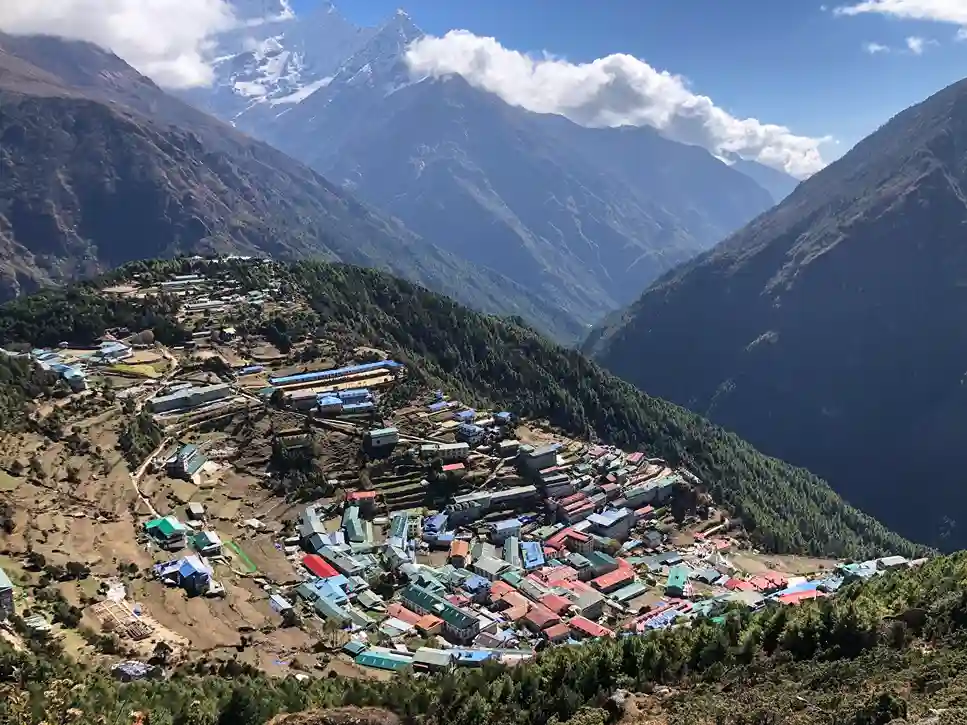
From Phakding, you walk towards Namche Bazaar after breakfast. This trail follows the Dudh Koshi River and is situated within a few small settlements, waterfalls and suspension bridges. Along the way, you can enjoy views of Thamserku, Kusum Khagkaru, and other surrounding peaks. The trail then leads to Monjo, the gate to Sagarmatha, where the permission papers are verified. Trail then passes through the last village before Namche Bazaar, Jorsale, and then arrives at the famed Hillary Suspension Bridge. Once you cross the bridge, the path flattens out as it heads uphill to Namche Bazaar. If you are lucky enough, you can also get the views of Mount Everest for the first time on the way to Namche Bazaar, and Lhotse, Tawache and other Himalayan peaks is possible on a clear day. On the way, stop by a view point to enjoy the mountain landscape before heading to Namche. Namche Bazaar is the main town of the Khumbu region and is also an important stop on the acclimatisation journey. If the trek falls on Saturday, you can get to explore the market it is a time when the local market might operate, selling traditional items and local products. Upon arriving at the village of Namche, you have the opportunity to relax and learn about the local area. Spend the night at a tea house or lodge in Namche Bazaar.

  • Max Elevation: 3,440 meters (Namche Bazaar)
  • Travel Distance: 10 to 12 kilometers
  • Travel Hours: 5 to 6 hours
  • Accommodation: Tea house /Lodge
  • Meal: Breakfast, Lunch and Dinner
Day 5: Accommodation Day and Rest Day at Namche Bazaar

You can use this day wisely as a critical accommodation day in Namche Bazaar, where your body needs time to acclimatize itself to the higher altitude before you traverse to the higher elevations. A short hike to a higher elevation with subsequent rest at Namche is a typical method used to achieve the gradual acclimatization. To enjoy the panoramic views of Mount Everest, Ama Dablam, Nuptse, Lhotse and other surrounding peaks, you can go hiking to the Everest View Hotel at about 3,880m. Other alternatives are short treks to nearby villages in Khumjung and Khunde or hikes to the longer destination. Namche Bazaar itself has plenty to explore, including the Sherpa Culture Museum, which provides information about Sherpa traditions, mountaineering history, local flora, and fauna. The town also has teahouses, bakeries, restaurants, souvenir shops and internet cafés, providing some modern comforts before getting further off the track. Khumjung is also famous for its monastery, linked to the traditional display of the Yeti scalp, and the Hillary School. After exploring Namche and its surroundings, return to the lodge and spend the night in Namche Bazaar.

  • Max Elevation: 3,880 meters (Everest View Hotel)
  • Travel Distance: 4 to 6 kilometers
  • Travel Hours: 3 to 4 hours
  • Accommodation: Tea house /Lodge
  • Meal: Breakfast, Lunch and Dinner
Day 6: Trek to Tengboche from Namche Bazaar

From Namche Bazar, the hike starts with a gentle ascent on a ridge with stunning views to the surrounding peaks including Thamserku, Kusum Kanguru, Kantega, Everest, Lhotse, Nuptse, Ama Dablam etc. The trail then continues through forests and small settlements such as Sanasa and Kyangjuma. As you continue, you arrive at the junction of the trails for Gokyo Valley and Everest Base Camp. The trail to the Everest Base Camp passes through the forest and eventually arrives at the Dudh Koshi River. On the far side of the suspension bridge, you will arrive in the tiny village of Phunki Tenga, where you will find water-powered prayer wheels. The Phunki Tenga trail leads through both rhododendron and pine woods and ascends with increasing steepness until it reaches Tengboche. Tengboche is at 3,860m on a ridge, seen as the spiritual hub of the Khumbu region and the site of the renowned Tengboche Monastery. The monastery provides wonderful panoramic views of Ama Dablam, Everest, Lhotse and other peaks around the Himalayas. If the time is appropriate, you are also allowed to participate in the evening prayer ceremony which is held around 3pm and experience the calm of the monastery. Once you have explored Tengboche, head back to the lodge for an overnight stay at Tengboche.

  • Max Elevation: 3,860 meters (Tengboche)
  • Travel Distance: 9 to 10 kilometers
  • Travel Hours: 5 to 6 hours
  • Accommodation: Tea house /Lodge
  • Meal: Breakfast, Lunch and Dinner
Day 7: Trek to Dingboche from Tengboche

The trail moves to the more elevated valleys of the Khumbu region. From Tengboche, this trek heads through the Musk Deer Track and heads down to Deboche, where it reaches the Imja River. After crossing a suspension bridge, the trail climbs gradually toward Pangboche. There are several chortens and mani walls along the way, as well as some small settlements and traditional stone buildings. Pangboche is another wonderful place to stop for a few days, and you will enjoy a stunning and different kind of view of Ama Dablam from here. The old monastery and the traditional mountain culture of the village are also remarkable. From Pangboche, the trail continues mostly alongside the Imja River. On the way a number of suspension bridges and small settlements are encountered before an area breaks out flat and opens out towards Dingboche. Dingboche is located in a wide valley enclosed by stone-walled fields to shelter the crops from the cold wind of the mountain. As the altitude increases, the vegetation becomes thinner and the landscape more alpine. It also provides spectacular vistas of the nearby mountains, Ama Dablam, Lhotse and Island Peak. Once you arrive at Dingboche, you can take a break and enjoy the scenic mountain view while you spend the night in a tea house or lodge in Dingboche.

  • Max Elevation: 4,410 meters (Dingboche)
  • Travel Distance: 10 to 11 kilometers
  • Travel Hours: 5 to 6 hours
  • Accommodation: Tea house /Lodge
  • Meal: Breakfast, Lunch and Dinner
Day 8: Acclimatization Day and Rest Day in Dingboche

It is another acclimatization day in Dingboche to get your body accustomed to the higher altitude before heading to Everest Base Camp and Lobuche East climbing section next day. Gradual acclimatisation is achieved by a short hike to an elevated point followed by rest in Dingboche. One choice is to trek up towards Nagarjun Hill, which is approximately 5,083 meters high and provides broad vistas of Lhotse, Makalu, Cholatse, Tawache, Ama Dablam, Island Peak, and other mountains. The walk is a bit strenuous in parts but the higher vantage point views of the mountain makes it worthwhile. Alternatively, you can hike towards Chhukung Village at approximately 4,730 m. Depending on the group's health and time, some trekkers decide to visit the Ama Dablam Base Camp or the ancient Nangkartshang Monastery. The rest of the day is free for relaxation and preparation for the higher sections of the journey. Your climbing guide will also check the climbing equipment and discuss the upcoming summit attempt, including basic technical climbing requirements. After the day's activities, return to the lodge, and spend the night in Dingboche, with a warmly served meal.

  • Max Elevation: 5,083 meters (Nagarjun Hill)
  • Travel Distance: 5 to 7 kilometers
  • Travel Hours: 4 to 6 hours
  • Accommodation: Tea house /Lodge
  • Meal: Breakfast, Lunch and Dinner
Day 9: Trek to Lobuche from Dingboche

The trek continues towards the higher elevations of the Everest region, after acclimatizing in Dingboche. Trail starts with a gentle ascent through the valley, crossing a chorten and leading toward Thukla. As you travel, you pass farmland, open meadows and views of mountains as the terrain becomes more rugged. Then it starts to climb from Thukla towards the ridge of Chukpi Lari, also called Thukla Pass, becoming more steep. There are several stone memorials in this area, which are dedicated to the memory of climbers who died during expeditions in the Everest region. The memorials serve as a solemn reminder of the difficulties, and dangers of mountain climbing at altitude. After passing the memorials, the trail continues along the lateral moraine of the Khumbu Glacier. The path is now easier heading further on to Lobuche, a small village with glacial landscape and high peaks on the horizon. Lobuche is located below Lobuche Peak and provides a view of Nuptse and surrounding peaks. As the altitude increases, the air becomes thinner and the colder conditions become more noticeable. After reaching the village, you can rest and enjoy the mountain scenery; including the sunset over Nuptse. Spend the night at a tea house or lodge in Lobuche.

  • Max Elevation: 4,910 meters (Lobuche)
  • Travel Distance: 11 to 12 kilometers
  • Travel Hours: 5 to 6 hours
  • Accommodation: Tea house /Lodge
  • Meal: Breakfast, Lunch and Dinner
Day 10: Trek to Gorakshep and Hike to Everest Base Camp

This is one of the major days of the trek as you head toward Everest Base Camp. After Lobuche, the path winds through the high altitude scenery towards Gorakshep, which takes you around 3 hours. The route becomes more rugged, as you walk closer to the Khumbu Glacier, with views of surrounding peaks and glacial terrain. After reaching Gorakshep, you will have some time to rest and have lunch; before continuing toward Everest Base Camp, which takes you 2 hours for ascending and 2 hours descending. The trail follows the rocky moraine and glacier area; with changing views of the Khumbu Glacier and surrounding mountains. After reaching Everest Base Camp at 5,364 meters, you can spend some time exploring the area and enjoying the views of the Khumbu Glacier, ice formations, and nearby Himalayan peaks. Climbing in spring seasons can be particularly hectic at base camp. Then you'll spend a night in Gorakshep and head back to Everest Base Camp. This can be a challenging day given the elevation and the hours on your feet, but the pace and effort will be comfortable and steady.

  • Max Elevation: 5,364 meters (Everest Base Camp)
  • Travel Distance: 12 to 13 kilometers
  • Travel Hours: 7 to 8 hours
  • Accommodation: Tea house /Lodge
  • Meal: Breakfast, Lunch and Dinner
Day 11: Early Morning Hike to Kalapatther and Back to Lobuche

An early morning trek to Kala Patthar, one of the most popular viewpoints of the Everest region, starts the day before the sun rises. The trail gradually ascends from Gorakshep, and the massive Pumori Peak rises above the surrounding landscape; and short breaks along the way provide time to rest and enjoy the changing views. Kala Patthar at 5,545m will be the final destination after about two hours of climb. From the rocky viewpoint, the first rays of sunlight illuminate Mount Everest and the surrounding peaks. One of the unforgettable moments in the journey is the panoramic view of Everest, Lhotse, Nuptse, Pumori and other mountains in the Himalaya, which are visible from this place. Once you have seen the sunrise and the views of the mountains, you will go back down to Gorakshep for breakfast and a rest. The hike then heads south to Lobuche, which changes the emphasis from the Everest Base Camp area to the new climbing section, Lobuche East. After reaching Lobuche, you will have time to rest and prepare the necessary technical climbing equipment for the next stage. Enjoy the hot meals after a long day; and spend the night at the camp in Lobuche.

  • Max Elevation: 5,545 meters (Kala Patthar)
  • Travel Distance: 10 to 12 kilometers
  • Travel Hours: 5 to 6 hours
  • Accommodation: Tented Camp
  • Meal: Breakfast, Lunch and Dinner
Day 12: Trek to High Camp

This day marks the beginning of the technical climbing section of the journey. From Lobuche, the route heads toward Lobuche East High Camp through rocky and steep terrain. Depending on the conditions, crampons, climbing harnesses, ropes, and other mountaineering equipment may be used during the ascent. The trail gradually becomes steeper as it approaches the glacier and climbing sections. Fixed ropes may be used on steeper parts of the route, with guidance from the climbing team. The final section leads toward the high camp, which is located on a narrow ridge with impressive views of the surrounding mountains. Weather conditions can change quickly at this altitude, with strong winds and cold temperatures possible. The climbing team will monitor the conditions and adjust the pace or plans when necessary. After reaching Lobuche East High Camp, you will have time to settle into the tent, check the climbing equipment, and prepare for the early morning summit attempt. An early rest is recommended before the main climbing day. Spend the night at the tented camp at Lobuche East High Camp.

  • Max Elevation: 5,400 to 5,600 meters (Lobuche East High Camp)
  • Travel Distance: 4 to 5 kilometers
  • Travel Hours: 4 to 5 hours
  • Accommodation: Tented Camp
  • Meal: Breakfast, Lunch and Dinner
Day 13: Summit to Lobuche and Descend Back to Pheriche

Today is the main climbing day of the Lobuche East Peak expedition. The summit push begins very early in the morning, when the weather and snow conditions are generally more suitable for climbing. From the climbing area, the route continues across rocky and snowy terrain toward the higher sections of Lobuche East. The climb includes steep and technical sections where crampons, climbing harnesses, ropes, and other mountaineering equipment are used. Your climbing guide will support you throughout the climb and help maintain a safe pace based on the weather, trail conditions, and the condition of the climbing team. After several hours of climbing, you will reach the summit of Lobuche East at 6,119 meters. In clear weather, the summit offers wide views of Everest, Lhotse, Makalu, Nuptse, Ama Dablam, Pumori, Cholatse, and other Himalayan peaks. The time spent at the summit depends on weather conditions, safety, and the physical condition of the team. After enjoying the summit views and taking photographs, the descent begins. The downhill section also requires careful movement across steep and snowy terrain. After completing the summit push, you will continue descending toward Pheriche. Once you reach Pheriche, you can rest, enjoy your meals, and recover after the demanding summit day. You spend the night at a tea house or lodge in Pheriche.

  • Max Elevation: 6,119 meters (Lobuche East Peak)
  • Travel Distance: 7 to 8 kilometers
  • Travel Hours: 8 to 10 hours
  • Accommodation:  Tea house /Lodge
  • Meal: Breakfast, Lunch and Dinner
Day 14: Trek to Namche Bazaar from Pheriche

After the successful Lobuche East summit, you will begin the trek from Pheriche toward Namche Bazaar. The trail gradually descends through the familiar mountain landscapes, passing through Pangboche and Tengboche. As you move to lower elevations, the air becomes easier to breathe and the temperatures are generally warmer. From Tengboche, the trail continues through forests and small settlements before following the Dudh Koshi River. The route includes some uphill and downhill sections as you make your way toward Namche Bazaar. The changing scenery and improved oxygen levels make the trek more comfortable after the demanding summit day. After reaching Namche Bazaar, you will have some free time to rest and explore the town. You can visit local restaurants, bakeries, souvenir shops, and other stores around the busy streets. In the evening, a team dinner can be arranged to celebrate the successful Lobuche East summit and share memories of the trekking and climbing experience. After a warm and relaxing meal, spend the night at a tea house or lodge in Namche Bazaar.

  • Max Elevation: 3,440 meters (Namche Bazaar)
  • Travel Distance: 13 to 14 kilometers
  • Travel Hours: 5 to 6 hours
  • Accommodation: Tea house /Lodge
  • Meal: Breakfast, Lunch and Dinner
Day 15: Trek to Lukla from Namche Bazaar

This is the final trekking day of the journey, with the trail descending from Namche Bazaar toward Lukla. The route follows the familiar Everest Base Camp trail and passes through small mountain villages, forests, and suspension bridges over the Dudh Koshi River and other glacier-fed streams. As the altitude decreases, the air becomes warmer and the vegetation becomes greener. The walk offers a chance to revisit some of the landscapes and villages seen earlier in the journey while gradually making your way toward Lukla. After reaching Lukla, there will be time to rest and prepare for the flight to Kathmandu or Ramechhap the following day. Your gear can also be packed and checked in preparation for the early morning departure. If the weather and schedule allow, the evening can include a small celebration with the trekking and climbing crew to mark the completion of the trek and successful summit attempt. Spend the night at a tea house or lodge in Lukla, and enjoy the warmly served meals.

  • Max Elevation: 2,860 meters (Lukla)
  • Travel Distance: 18 to 20 kilometers
  • Travel Hours: 6 to 7 hours
  • Accommodation: Tea house /Lodge
  • Meal: Breakfast, Lunch and Dinner
Day 16: Fly Back to Kathmandu from Lukla

After breakfast, you will head to Tenzing-Hillary Airport in Lukla for your flight back to Kathmandu. The short flight offers one final opportunity to enjoy views of the hills, valleys, and Himalayan landscapes from above. Flight schedules from Lukla can sometimes be affected by weather conditions, so the departure time may change. Some flights may also operate via Ramechhap depending on the season and airport operations. After arriving in Kathmandu, you will be transferred to your hotel. The rest of the day is free for rest or some final shopping and exploration around the city. In the evening, you can enjoy a relaxed dinner and reflect on the trekking and climbing experience before your departure the following day. Spend the night at your 3-star hotel in Kathmandu after a successful trek.

  • Max Elevation: 1,400 meters (Kathmandu)
  • Travel Distance: 135 kilometers by air
  • Travel Hours: 30 to 35 minutes flight
  • Accommodation: Tea house /Lodge
  • Meal: Breakfast, Lunch and Dinner
Day 17: Final departure

After breakfast, you will have some free time before your scheduled departure. Our representative will assist you with your transfer to Tribhuvan International Airport according to your flight time. Make sure you have all your personal belongings and travel documents with you before leaving the hotel. You can then head to the airport for your onward journey, taking home the memories of your Lobuche East Peak Climbing with Everest Base Camp Trek. We hope you had a memorable time in Nepal and look forward to welcoming you again for another Himalayan adventure.

  • Max Elevation: 1,400 meters (Kathmandu)
  • Travel Distance: 6 to 8 kilometers
  • Travel Hours: 20 to 30 minutes
  • Meal: Breakfast

Lukla flight

Most trekkers reach the Everest region via a short, scenic flight to Tenzing-Hillary Airport (LUA) in Lukla. During the peak trekking seasons (March–May and October–November), flights are often rerouted to depart from Manthali Airport in Ramechhap instead of Kathmandu to reduce air traffic congestion.Most trekkers reach the Everest region via a short, scenic flight to Tenzing-Hillary Airport (LUA) in Lukla. During the peak trekking seasons (March–May and October–November), flights are often rerouted to depart from Manthali Airport in Ramechhap instead of Kathmandu to reduce air traffic congestion.

Most trekkers reach the Everest region via a short, scenic flight to Tenzing-Hillary Airport (LUA) in Lukla. During the peak trekking seasons (March–May and October–November), flights are often rerouted to depart from Manthali Airport in Ramechhap instead of Kathmandu to reduce air traffic congestion.Most trekkers reach the Everest region via a short, scenic flight to Tenzing-Hillary Airport (LUA) in Lukla. During the peak trekking seasons (March–May and October–November), flights are often rerouted to depart from Manthali Airport in Ramechhap instead of Kathmandu to reduce air traffic congestion.

Trek Route

None

What's included

  • Airport pickup and drop-off by private vehicle as per the flight schedule
  • Trip briefing and preparation meeting before the trek
  • Welcome Dinner in Kathmandu 
  • 3-star hotel accommodation in Kathmandu with breakfast
  • Domestic flights between Kathmandu-Lukla-Kathmandu or Ramechhap-Lukla-Ramechhap During the peak season including airport transfers
  • Sagarmatha National Park entry permit
  • Khumbu Pasang Lhamu Rural Municipality permit
  • Lobuche East Peak climbing permit
  • Breakfast, lunch, and dinner with 3 cup of tea/coffee per day during the trek and climbing period
  • Accommodation in teahouse/lodge and tented camp
  • Licensed, English-speaking, first-aid-trained trekking and climbing guide
  • Assistant guide for groups of more than six people
  • Porter service with one porter shared between two trekkers (weight Limit =10-12 kg per person.
  • Staff wages, meals, accommodation, insurance, and necessary equipment
  • Tents and necessary camping equipment for the climbing section
  • Group climbing equipment such as ropes, ice screws, snow bars, and other required gear
  • First-aid medical kit carried by the guide
  • Pulse oximeter and emergency oxygen support carried by the guide
  • Assistance with emergency rescue arrangements when required
  • Government taxes, VAT, and applicable service charges
  • Free luggage storage in Kathmandu during the trek
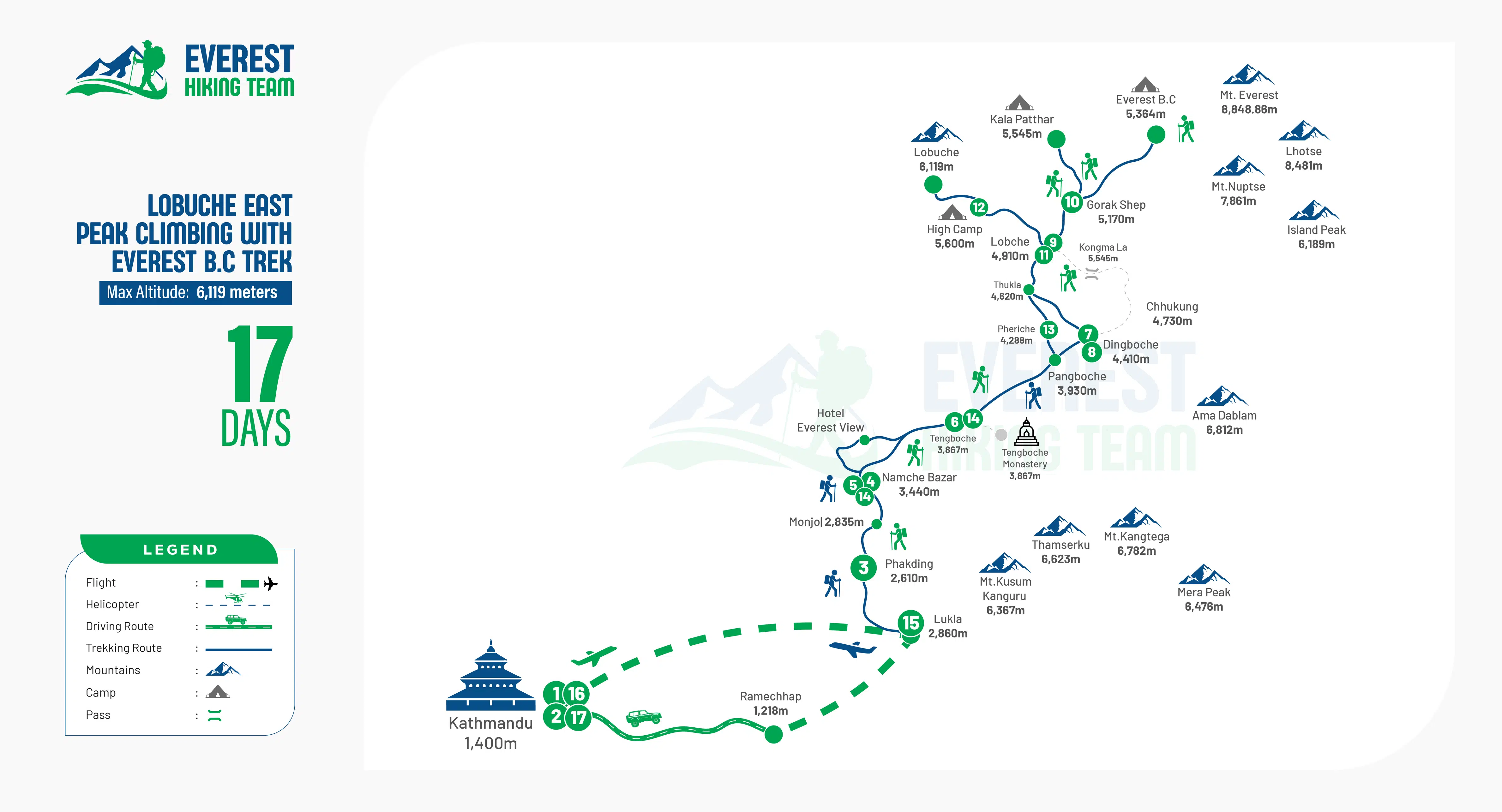
  • Lobuche East peak climbing and Everest base camp trek map

What's excluded

  • International airfare to and from Nepal
  • Nepal entry visa fees
  • Extra hotel nights or meals in Kathmandu outside the included itinerary
  • Travel insurance covering high-altitude trekking, peak climbing, medical treatment, and emergency evacuation
  • Personal expenses such as hot showers, Wi-Fi, charging, laundry, and extra meals
  • Alcoholic drinks, soft drinks, bottled water, and other personal beverages
  • Personal trekking and climbing clothing and equipment
  • Personal medical supplies and toiletries
  • Excess baggage or cargo charges above the permitted baggage limit
  • Personal climbing equipment required for individual use
  • Special permits for filming, drones, or professional photography
  • Emergency evacuation and medical treatment costs
  • Extra accommodation or meals caused by flight delays, bad weather, or itinerary changes
  • Tips for guides, porters, and support staff
  • Any services or expenses not specifically mentioned under the cost includes section

Frequently Asked Questions

How difficult is Lobuche East Peak Climbing with Everest Base Camp Trek?

Lobuche East Peak Climbing with Everest Base Camp Trek is a challenging adventure. It includes long trekking days, high-altitude walking, and a technical peak climb. Good physical fitness, proper acclimatization, and previous high-altitude trekking experience are recommended for a safer and more comfortable journey.

What is the highest altitude reached during the trek?

The highest point of the journey is the summit of Lobuche East Peak at 6,119 meters. You will also reach Everest Base Camp at 5,364 meters and Kala Patthar at around 5,545 meters. Proper acclimatization days are included to help your body adjust to the increasing altitude.

Do I need previous climbing experience for Lobuche East?

Previous technical climbing experience is not always required, but some high-altitude trekking experience is helpful. You should have good physical fitness and be comfortable walking for several hours each day. An experienced climbing guide will provide basic training and help you use equipment such as crampons, ropes, and ice axes.

What is the best time for Lobuche East Peak Climbing?

The best seasons for Lobuche East Peak Climbing are spring and autumn. March, April, and May usually offer good climbing conditions, while September, October, and November are known for clearer skies and stable weather. These months also provide good visibility of Everest and other Himalayan peaks.

What permits are required for the trek?

Several permits are required for this trek, including the Sagarmatha National Park entry permit, Khumbu Pasang Lhamu Rural Municipality permit, and Lobuche East climbing permit. These permits are normally arranged by the trekking agency as part of the package, so you do not need to arrange them yourself.

What type of accommodation is available during the trek?

Accommodation during the trekking section is mainly provided in simple mountain teahouses and lodges. Rooms usually have basic beds and shared facilities. During the Lobuche East climbing section, you will stay in tents at High Camp. Kathmandu accommodation is provided in a 3-star hotel as mentioned in the itinerary.

What happens if the Lukla flight is delayed?

Lukla flights depend on weather and visibility, so delays or cancellations can sometimes happen. If this occurs, the itinerary may need to be adjusted. It is important to keep some flexibility in your schedule and have travel insurance that covers flight delays, cancellations, and emergency situations.

User Review